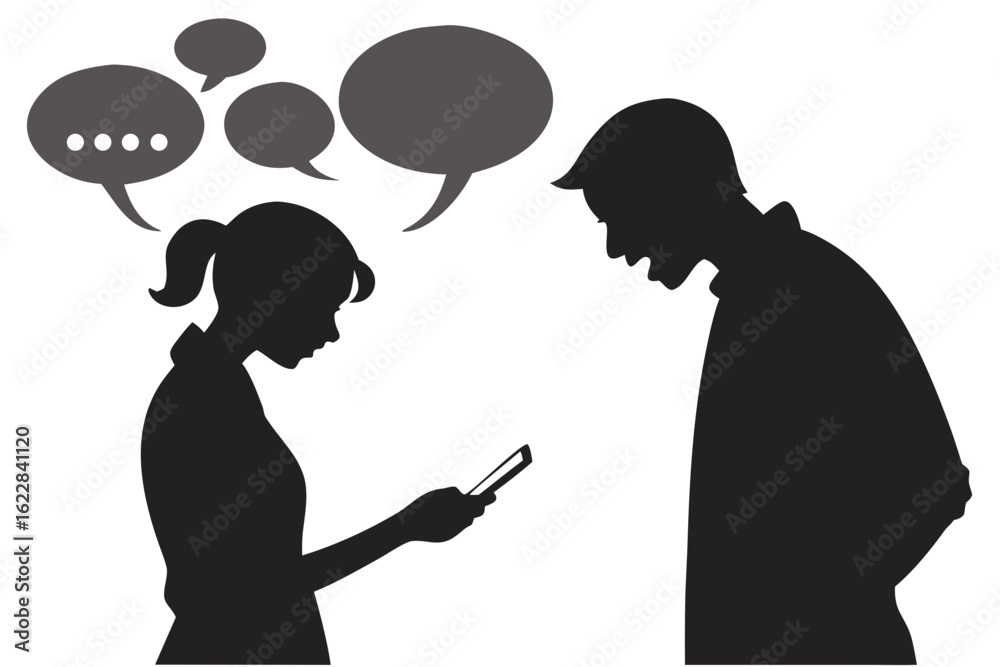
On a crowded commuter train, two passengers sit opposite each other, each speaking loudly into their phones while ignoring the person right in front of them.
This scene, observed in a German regional train, illustrates the growing habit of „phubbing“ — snubbing someone in favor of a smartphone — a behavior now so widespread that researchers say It’s eroding face-to-face communication even as digital messaging reaches record levels.
How phubbing became a named behavior
The term „phubbing,“ a blend of „phone“ and „snubbing,“ was coined on May 22, 2012, at 4:22 p.m. During a linguistics experiment by the advertising agency McCann at the University of Sydney.
The exercise, designed to promote the sixth edition of the Macquarie Dictionary, tasked lexicographers, phoneticians, crossword creators and poets with inventing a new word — and the group’s collective distraction by their phones gave rise to the term.
Why researchers are studying its effects
Since its creation, academic interest in phubbing has grown sharply, with studies linking the behavior to decreased relationship satisfaction, increased feelings of isolation, and weaker family bonds.

Last time a similar shift in social behavior drew this level of scrutiny — the rise of television dining in the 1950s — researchers later found it altered household interaction patterns for decades.
What exactly is phubbing?
Phubbing refers to the act of ignoring someone in a social setting by looking at or using a smartphone instead of engaging with them.
Is phubbing getting worse?
The source indicates that while communication volume has never been higher, mutual understanding has declined, suggesting phubbing may be increasing as smartphone leverage becomes more constant and immersive.
Weiterlesen