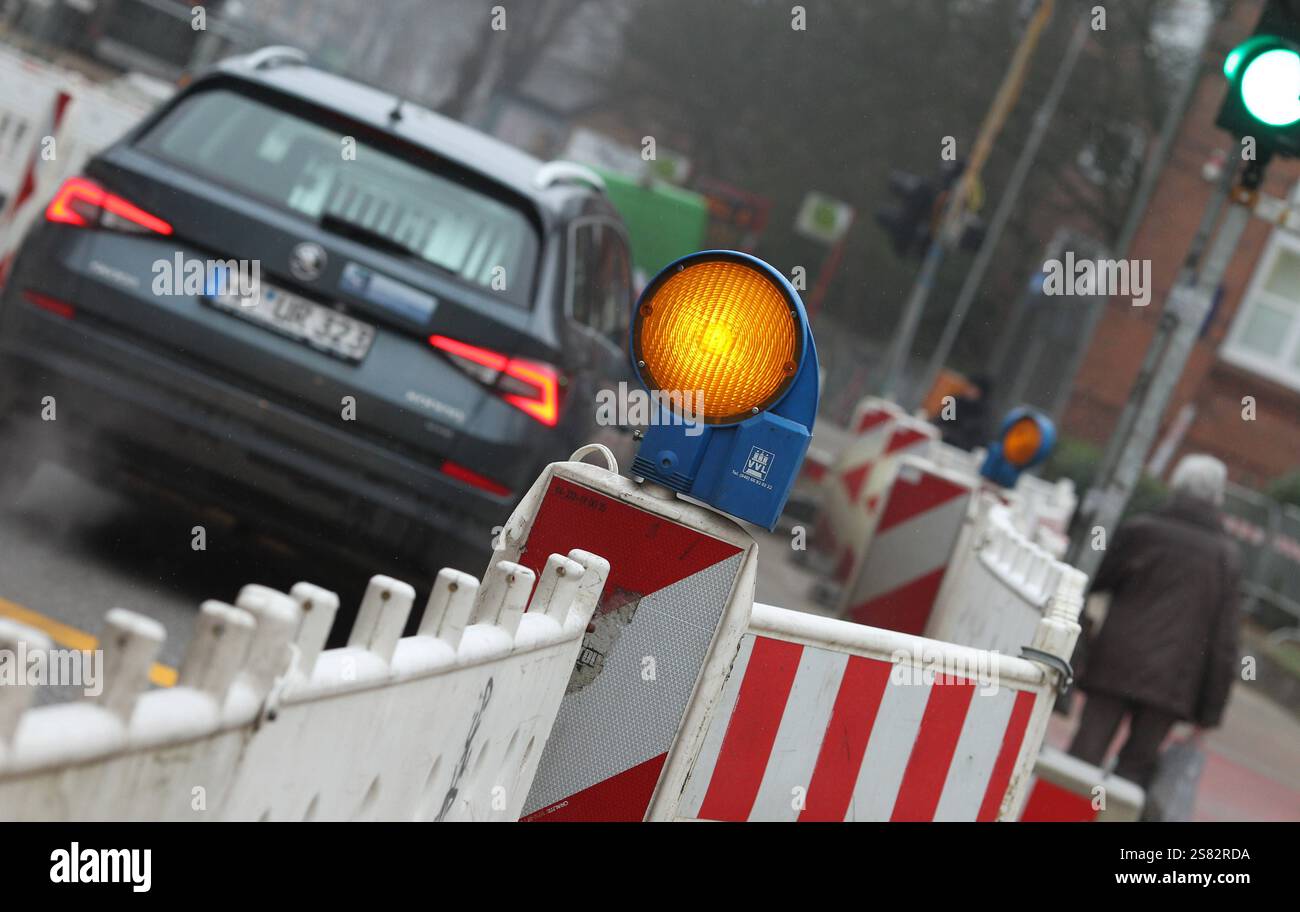
More than 50 traffic lights across Hamburg malfunctioned on Friday afternoon, creating gridlock and safety hazards as signals failed to cycle properly or remained stuck on red or green.
How the signal failure disrupted traffic flow
At approximately noon, traffic lights began switching erratically — some failing to change from red to green, others locked in permanent green or red — according to Hamburg’s traffic control center. At the intersection of Koppelstraße and Hagenbeck’s Tierpark, drivers reported uninterrupted green lights whereas pedestrians hesitated at crosswalks before eventually crossing against the signal on the busy road. Similar scenes unfolded at Kieler Straße, Glashütter Landstraße, Poppenbütteler Weg (Ring 3), and Hammer Landstraße, where police stepped in to manually direct traffic at multiple locations.
Why officials still lack a clear explanation
Nils Schönrok of Hamburg Verkehrsanlagen confirmed crews are working under pressure to restore normal operations but emphasized the root cause remains entirely unknown. The city oversees more than 1,700 signalized intersections, and while no official theory has been released, the simultaneous failure across disparate districts suggests a systemic issue rather than isolated hardware faults. No injuries or collisions were reported in the initial police updates, though officials warned of heightened risk until full functionality returns.
For more on this story, see Over 50 traffic lights malfunction across Hamburg, causing citywide disruptions.
What this means for urban infrastructure resilience
The incident raises questions about the vulnerability of centralized traffic control systems, especially as cities increasingly rely on networked infrastructure for real-time management. While Hamburg has not confirmed whether the fault originated in software, communications, or power distribution, the scale of the outage — affecting roughly 3% of the city’s signals in a concentrated timeframe — mirrors past failures in other European cities linked to cascading network errors. Experts note that without redundant fallback mechanisms, such events can rapidly escalate from inconvenience to public safety concerns, particularly during peak travel periods.

How long did the disruption last?
The outage began around midday on Friday and was still ongoing as of late afternoon, with no estimated time for full restoration provided by authorities.
Were any alternative traffic management systems activated?
Police deployed officers to direct traffic at the most affected intersections, but no citywide switch to backup signal patterns or temporary traffic rules was announced.
Auch interessant