
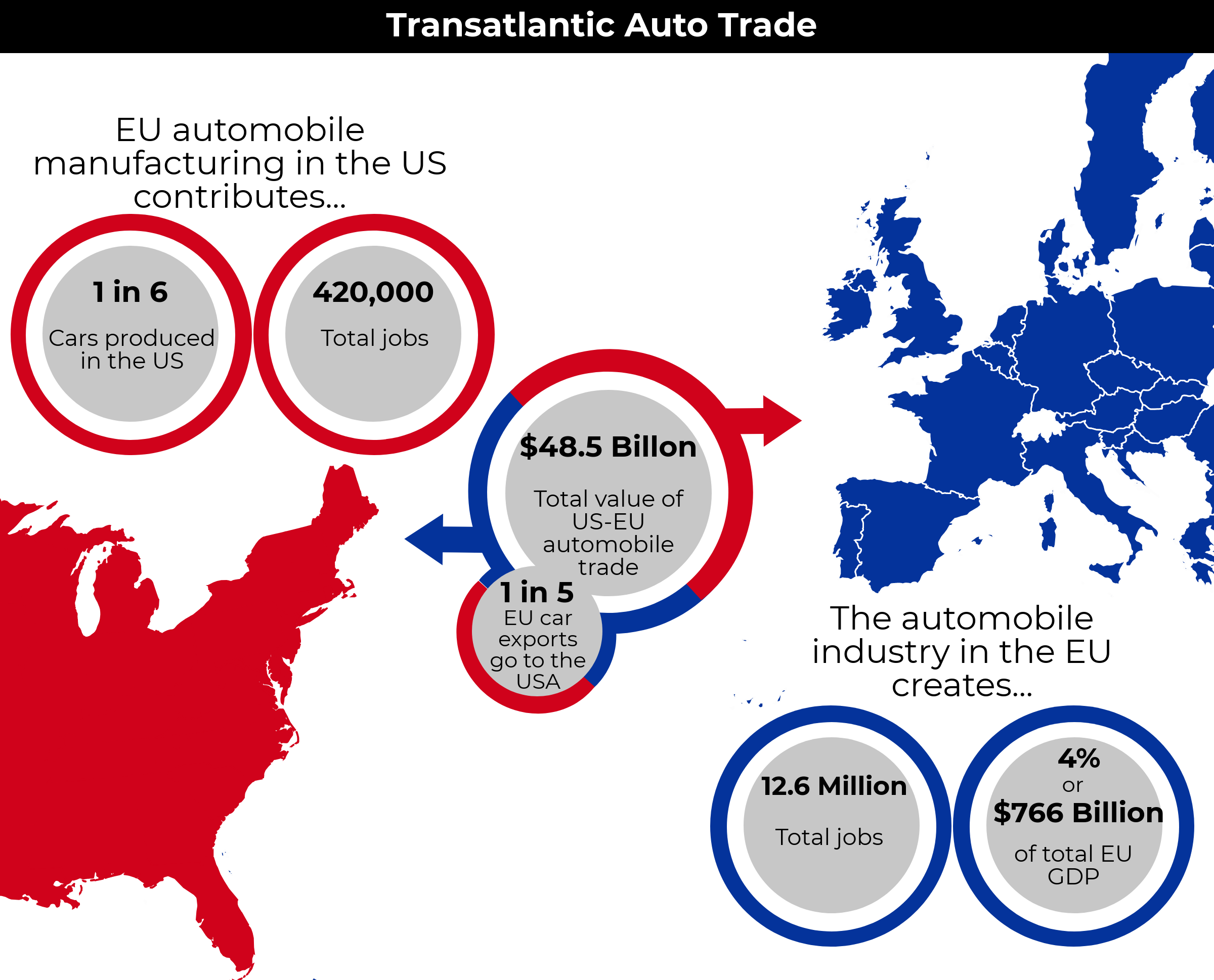
On what legal basis can the US administration unilaterally raise tariffs on European vehicles while a high court questions the very authority to do so? This is the central tension following the announcement that import duties on EU-made cars and trucks will increase notably starting next week.
The decision marks a change in the trade environment established in 2025. Under a trade agreement reached in September 2025, US tariffs on vehicles and spare parts from the EU were capped at a lower rate. This provided European manufacturers a preferential status, as many other US trade partners remained subject to higher rates. This status is now being challenged by the administration’s latest mandate.
Allegations of a breached 2025 agreement
The administration has justified this sudden shift by claiming that the EU has failed to adhere to the terms of the trade deal. These accusations were delivered via a post on the Truth Social platform, where the administration alleged that the EU is not following the agreed-upon framework.
However, the specifics of these allegations remain opaque. According to reporting by Spiegel, it was initially unclear which specific points of the agreement the administration was referencing. No detailed evidence or specific clauses of the breach were provided in the announcement.
The agreement in question was the result of negotiations between the US and EU Commission President Ursula von der Leyen, with a deal reached in July of the previous year. By September 2025, this had evolved into a broad trade pact covering numerous sectors, with the tariff ceiling serving as a cornerstone for the automotive industry.
The Supreme Court and the ‚economic emergency‘
While the administration moves toward implementation next week, the legal foundation for these tariffs is under intense scrutiny. The US Supreme Court has raised fundamental questions regarding the executive’s power to impose such duties.
As reported by DIE ZEIT, the court has questioned the status of the agreement, specifically ruling that the administration is not authorized to declare an economic emergency to justify the imposition of tariffs on EU goods.
This creates a paradoxical situation: the administration is moving to implement a higher tariff based on a perceived breach of a contract, yet the judiciary has indicated that the executive lacks the specific authority to trigger the emergency powers often used to bypass standard legislative tariff processes. If the administration cannot legally declare an economic emergency, the mechanism used to enforce these higher rates may be fundamentally flawed.
Impact on EU automotive exports
The timing of this implementation—slated for next week—leaves European manufacturers with almost no window to adjust their pricing strategies or logistics. The increase in tariffs represents a notable change in costs that affects both finished vehicles and the spare parts essential for maintenance and repair.
For the EU automotive sector, the tariff cap was a critical component of market access. By removing this preference, the US administration is effectively neutralizing the primary benefit of the September 2025 agreement. This shift may force exporters to either absorb the cost increase or adjust pricing for US consumers, which could impact the accessibility of European luxury and commercial vehicles.
Because the administration has not provided the specific evidence for the alleged breach, EU officials are left to operate in a vacuum of information. It remains unclear whether the administration is seeking a specific policy change from Brussels or if the tariffs are intended as a broader geopolitical lever.
The immediate implementation suggests an approach focusing on immediate action. By enforcing the higher rate before the Supreme Court has fully resolved the question of executive authority, the administration is establishing a new trade status while legal proceedings continue, which may complicate future efforts to revert to previous levels.
The collision between executive action and judicial restraint now places the EU-US trade relationship in a period of uncertainty. The automotive industry, which relies on predictable regulatory environments to manage long-term production cycles, now faces a scenario where the legality of its import costs is decided by a court and the rate of those costs is decided by a social media post.


