
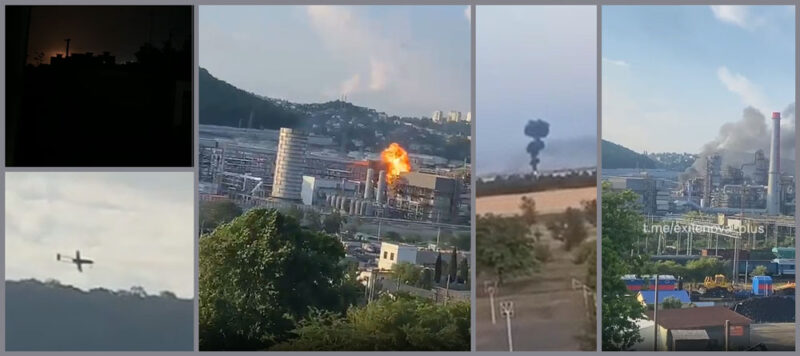
Ukrainian drones struck Russian oil infrastructure across four regions overnight, igniting a blaze in Tuapse that has burned for three days and sent toxic smoke plumes visible from space.
The coordinated attacks hit the Nowokuibyschewer petrochemical plant in Samara, the Gorky oil pump station near Kstowo, an oil depot in Sevastopol on Crimea, and the Tuapse refinery on the Black Sea coast, according to regional officials and monitoring channels. In Sevastopol, Moscow-appointed governor Michail Raswoschaew initially reported nine drones shot down, later revising the toll to fifteen after the depot—previously struck in October 2024 and 2025—was hit at least five times.
In Samara, regional head Wjatscheslaw Fedorischtschew confirmed via Telegram one death and two injuries at the Rosneft-linked facility, a major hub for gas processing and organic synthesis. Near Kstowo, residents reported explosions and fire at the Transneft-operated Gorky station, a critical node in the Upper Volga pipeline system, though Russian authorities have not officially acknowledged the incident.
The most sustained damage is in Tuapse, where a fire ignited in an oil products storage area after drone strikes on April 16 and 20 has resisted containment efforts by 276 firefighters and 77 vehicles. Copernicus satellite imagery shows the smoke plume stretching over 70 kilometers into the Black Sea, with air quality tests revealing benzene levels two to three times above safe limits—prompting authorities to urge residents to seal windows and wipe surfaces.
The Tuapse refinery, which exports most of its output, has ceased operations according to two industry sources cited by BILD, compounding losses from earlier strikes that damaged harbor transport infrastructure. Russian military officials in Krasnodar described the blaze as a direct consequence of a “Kiev regime” drone attack, framing the assault as part of a broader pattern Selenskyj cited in March as having caused billions in monthly damages to Moscow’s oil sector.
For more on this story, see Ukrainian drones strike Russian oil infrastructure in three regions.
These strikes reflect a deliberate Ukrainian strategy to degrade Russia’s energy export capacity and fiscal resilience, targeting not just output but the logistics and processing nodes that turn crude into state revenue. The simultaneous multi-region assaults strain Russian emergency response and highlight vulnerabilities in infrastructure long presumed shielded behind front lines.
This follows our earlier report, Russia and North Korea deepen cooperation amid Ukrainian drone strikes on Russian infrastructure.
While the Kremlin downplays official confirmation in some cases, local governors and Telegram channels provide consistent evidence of impact—from fatalities in Samara to evacuated zones in Tuapse—undermining narratives of resilience. The human toll remains limited so far, but the environmental and economic consequences accumulate with each unextinguished flame and shuttered valve.
How significant is the Tuapse fire in the context of Ukraine’s campaign against Russian energy infrastructure?
The Tuapse blaze represents one of the longest-lasting and most geographically visible successes in Ukraine’s drone campaign, combining operational disruption with demonstrable environmental harm that complicates Russian claims of minimal impact.
Why have Russian authorities been inconsistent in confirming attacks on sites like the Gorky pump station?
<pRussian officials often avoid public acknowledgment of successful strikes to prevent panic, deny propaganda victories to Ukraine, and avoid triggering obligations under domestic emergency protocols that could expose preparedness gaps.
Weiterlesen


