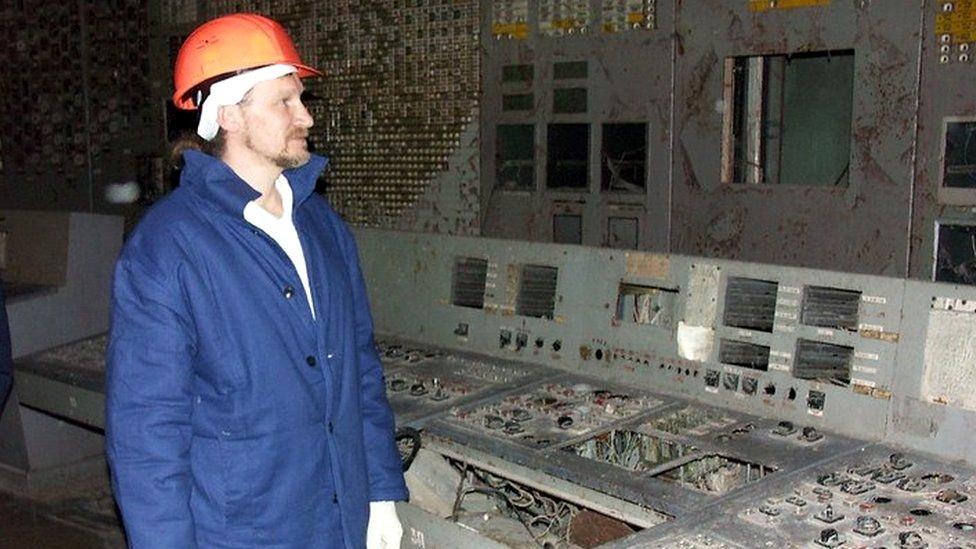
On April 26, 1986, at 7:07 a.m., Oleksiy Breus entered the control room of Chernobyl’s Reactor 4 to find the roof blown off and smoke pouring into the sky.
As a 27-year-old shift supervisor, he was ordered to pump cooling water into the exposed core despite knowing it was futile — a directive from Moscow that came as radiation levels spiked and colleagues began showing early signs of radiation sickness.
Breus remained at his post until the last cooling pump failed in the afternoon, making him the final person to press a button in the control room before evacuating, an act he later described as a “dubious honor” amid the eerie silence of failed machinery.
Breus survived both Chernobyl and the 2022 Russian invasion of Ukraine
Unlike many of his coworkers who succumbed to acute radiation syndrome, Breus credited his survival to early administration of potassium iodide tablets and the relatively shielded location of the control room, though he developed chronic lung conditions in the years that followed.
When Russian forces invaded Ukraine on February 24, 2022, Breus fled his home near Chernobyl, taking shelter in a school basement before eventually escaping by train to Poland and then Switzerland, where he now lives in a refugee shelter with his wife, relying on social aid and a modest Chernobyl pension.
His experience mirrors that of other liquidators who faced repeated crises
<img src="https://media1.faz.net/ppmedia/aktuell/94459691/1.7925737/format_top1_breit/oleksiy-breus-1986-auf-dem.jpg" alt="Breus survived both Chernobyl and the 2022 Russian invasion of Ukraine Unlike many of his coworkers who succumbed to acute radiation syndrome, Breus credited his survival to early administration of potassium iodide tablets and the relatively shielded location of the control room, though he developed chronic lung conditions in the years that followed. When Russian forces invaded Ukraine on February 24, 2022, Breus fled his home near Chernobyl, taking shelter in a school basement before eventually escaping by train to Poland and then Switzerland, where he now lives in a refugee shelter with his wife, relying on social aid and a modest Chernobyl pension. His experience mirrors that of other liquidators who faced
repeated crises Breus’s story echoes that of other Chernobyl workers who endured both the 1986 disaster and later geopolitical upheavals, much like the liquidators who were later recalled during the 1990s to maintain the sarcophagus amid funding shortages and political instability. Last time a similar convergence of technological and military catastrophe occurred — during the Fukushima Daiichi disaster in 2011 followed by regional security tensions — few individuals were documented as having direct, personal exposure to both events, making Breus’s dual survival a rare historical footnote. How did Oleksiy Breus survive the Chernobyl radiation exposure?“ title=“Breus Oleksiy Breus Chernobyl“ width=“960″ height=“430″ style=“max-width:100%;height:auto;border-radius:4px;“ loading=“lazy“ />Breus Oleksiy Breus Chernobyl
Breus’s story echoes that of other Chernobyl workers who endured both the 1986 disaster and later geopolitical upheavals, much like the liquidators who were later recalled during the 1990s to maintain the sarcophagus amid funding shortages and political instability.
Last time a similar convergence of technological and military catastrophe occurred — during the Fukushima Daiichi disaster in 2011 followed by regional security tensions — few individuals were documented as having direct, personal exposure to both events, making Breus’s dual survival a rare historical footnote.
How did Oleksiy Breus survive the Chernobyl radiation exposure?
He stated that he received potassium iodide tablets early and worked in a control room that offered relatively better protection than other areas of the plant, which likely reduced his thyroid radiation dose despite prolonged exposure.
Where does Breus live now and what supports his livelihood?
He resides in a refugee shelter in Switzerland with his wife, surviving on social welfare payments and a small pension tied to his status as a Chernobyl liquidator.
Operator’s Truth: What Caused Chernobyl? First English Interview with Oleksiy Breus
Johann Falk ist Chief Editor von Germanic Nachrichten und verantwortet die redaktionelle Linie, Themenauswahl und finale Qualitaetssicherung der Veroeffentlichung. Sein Schwerpunkt liegt auf klarer, verifizierter und schnell einordenbarer Berichterstattung fuer ein deutschsprachiges Publikum.
Alle Beiträge erscheinen nach redaktioneller Prüfung gemäß unseren Redaktionsrichtlinien.