
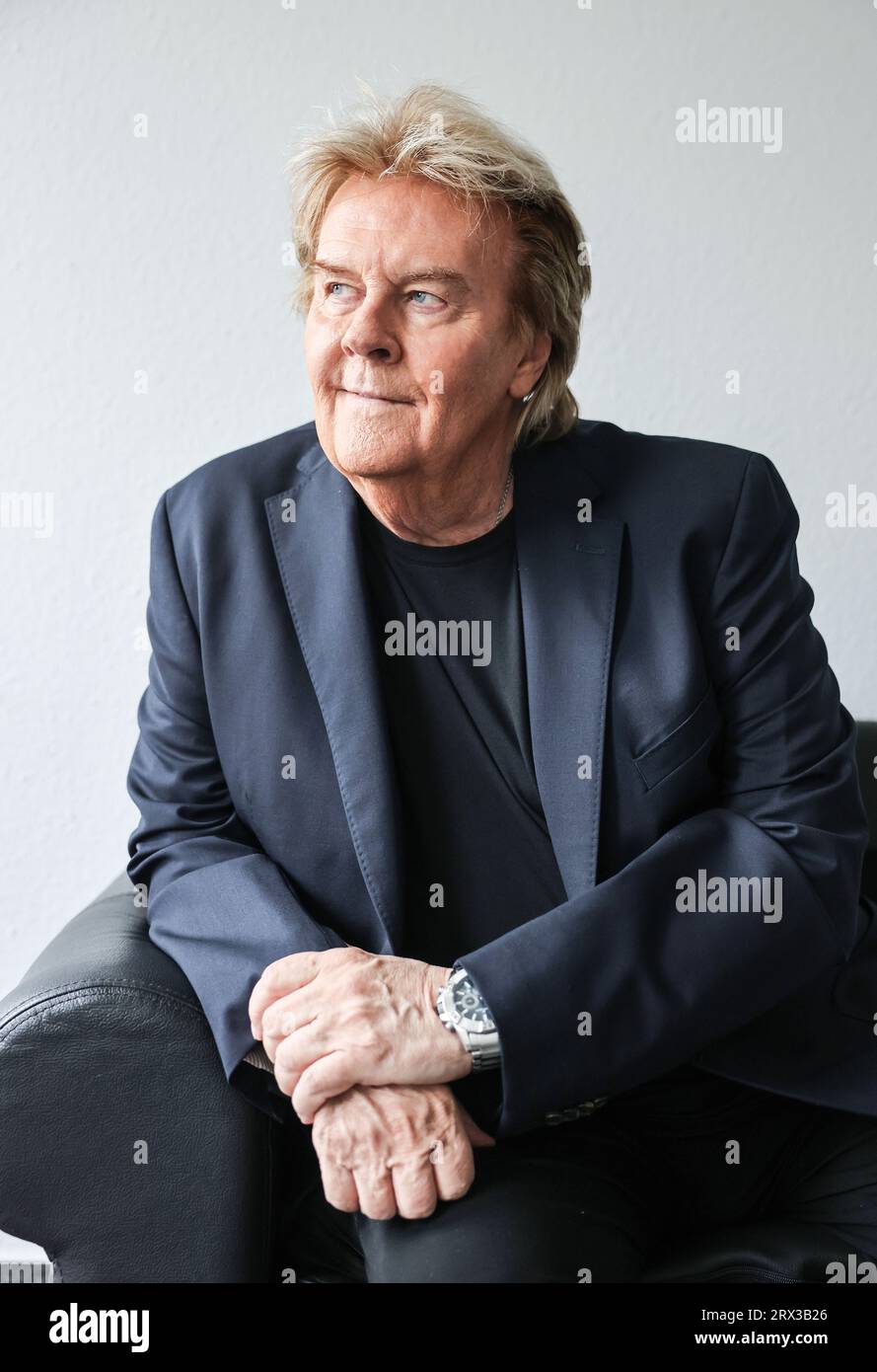
Howard Carpendale, the 80-year-old German Schlager legend, publicly confronted Oliver Welke over a joke made during the April 24 episode of ZDF’s “heute-show,” calling it offensive and demanding an apology.
The joke, delivered by Welke as part of a segment on AI and caregiving robots, imagined a robot telling seniors: “What has a hundred legs and smells like urine? The front row at a Howard Carpendale concert.” While the studio audience laughed, Carpendale responded swiftly on Instagram, expressing disappointment and questioning Welke’s familiarity with his audience.
“Oliver Welke. I am Howard Carpendale. I am a little disappointed. I never thought you’d have this tendency to mock people who can’t defend themselves,” Carpendale said in the video, repeating the joke before asking, “Advise me, are you joking? Have you ever been to one of my concerts? Do you even know what you’re talking about?”
He dismissed the humor as outdated, telling Welke to “talk to your writers — they have no idea,” and emphasized that over the past four weeks, he had welcomed 150,000 people to his concerts, describing them as “very fine people.” Carpendale invited Welke to attend a indicate in person so he could explain what empathy means, adding, “I’m following this — I promise you that.”
He concluded with a firm condition: “Only when you apologize will I speak with you.” In a caption beneath the video, he wrote: “Some sentences don’t deserve an answer. But they still require one.”
His son, actor Wayne Carpendale, backed him publicly, sharing the video and writing: “That’s why I love my dad. For who he is, not who he wants to be. Shame on you, Oliver.” Wayne also cited Kurt Tucholsky’s 1919 dictum — “What may satire do? Everything” — arguing that those who quote it should know the full context, noting that satire must “punch up” or it becomes “pathetic.”
For more on this story, see Howard Carpendale demands apology from Oliver Welke over offensive heute-show joke.
Fans of both Howard and Wayne Carpendale flooded the comment sections with outrage, echoing the sentiment that the joke crossed a line from satire into cruelty.
In response, Welke spoke to Bild.de, clarifying that the segment’s topic was artificial intelligence and that the robot’s joke was meant to be a deliberately bad follow-up. He admitted he had chosen Carpendale as the punchline because “everyone knows him,” but stressed he had never attended a Carpendale concert.
“Our topic was AI, and in a clip, a caregiving robot tells a bad joke. Then I tried to top it with an even worse one — and it worked. We needed a Schlager singer everyone recognizes. Honestly, I’ve never been to a Howard Carpendale concert,” Welke said.
He appeared on-air in a dark blue suit with a purple tie, smirking and waving off the joke with a quick “Sorry, sorry,” but Carpendale rejected the tone as insufficient, calling the remark “a bit off” and insisting it revealed a deeper issue: “It’s unbelievable that you can speak like that about people who can’t defend themselves.”
The incident highlights a growing tension in German public broadcasting over the boundaries of satire, particularly when it targets elderly or vulnerable fan bases of long-standing cultural figures. Carpendale, who has sold over 25 million records in a six-decade career and has long positioned himself as an advocate for the disadvantaged, framed the joke not as a personal slight but as an attack on his audience’s dignity.
The episode raises questions about the responsibility of satirists when referencing beloved public figures and their communities — especially when the humor relies on stereotypes rather than insight. While Welke framed the joke as a failed attempt at absurdity within an AI-themed sketch, Carpendale’s rebuttal centered on respect: not for himself, but for the thousands who attend his shows not for mockery, but for music, memory, and connection.
Why did Howard Carpendale take the joke personally?
He did not take it as a personal insult but as an attack on his fans, whom he described as decent people who deserve respect, especially since many are older and may feel unable to respond to public ridicule.

Has Oliver Welke apologized for the joke?
Welke offered a brief on-air “sorry, sorry” but has not issued a formal apology; Carpendale stated he would only speak with Welke after a proper apology is made.
Auch interessant


