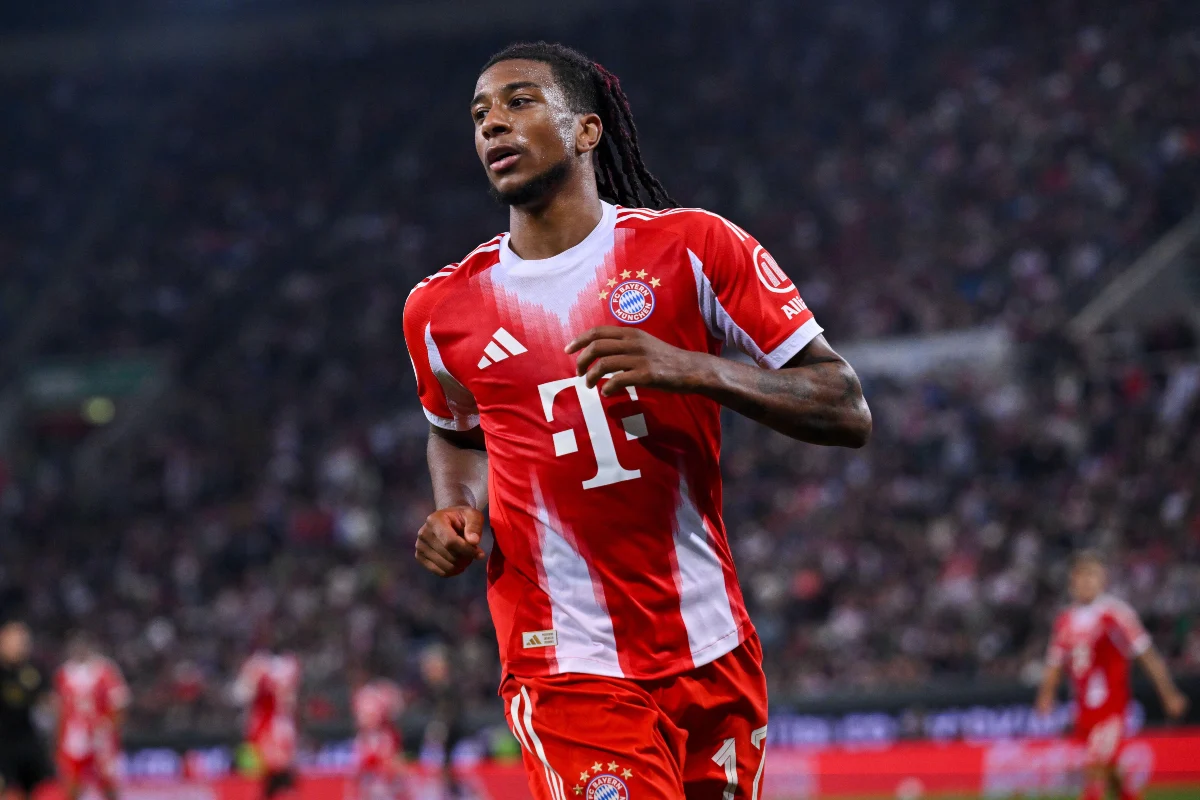
Munich’s Allianz Arena has witnessed numerous transfer sagas, but the current situation surrounding Michael Olise highlights the complex interplay between financial incentives and club identity. The winger, acquired in 2024, has since become a key figure in Bayern’s lineup, with his performances attracting interest from some of Europe’s wealthiest clubs. The club’s refusal to entertain offers for Olise raises questions about whether a team can resist the financial allure of record-breaking bids when the potential returns far exceed the initial investment.
Bayern’s position, articulated by officials familiar with the club’s transfer philosophy, emphasizes a commitment to retaining players who contribute to both on-field success and long-term stability. With reports suggesting substantial offers from clubs like Real Madrid and Liverpool, the decision to stand firm is framed as a pragmatic assessment of Olise’s value to the team. In an era where player valuations can shift rapidly, holding onto a rising talent is seen as a way to mitigate the risks of an unpredictable market.
The Unwritten Rule That Shaped a Transfer Philosophy
The rationale behind Bayern’s stance on Olise traces back to a precedent set over a decade ago. In 2009, the club faced a similar situation when Chelsea made a significant offer for Franck Ribéry. After internal deliberations, Bayern chose to retain Ribéry, establishing a principle that certain players would not be sold, even in the face of lucrative bids. This decision was not solely about Ribéry’s abilities but also about preserving the club’s identity in a sport increasingly driven by financial transactions.
This philosophy has since evolved into an informal policy guiding Bayern’s approach to player retention. The club’s reluctance to part with Olise mirrors its handling of other key figures, such as Thomas Müller and Joshua Kimmich, whose departures would disrupt more than just the team’s lineup. The scale of Olise’s rise in value—with his market valuation increasing significantly since his arrival—has intensified the debate. For a club known for its strategic player trading, the decision to retain Olise represents a notable departure from past practices.
The financial reasoning behind this approach is clear. In a transfer market where fees continue to climb, retaining a player whose value is still appreciating serves as a form of financial safeguard. Selling Olise now could require replacing him with another high-profile winger at an even greater cost. By holding onto him, Bayern aims to maintain a competitive advantage while allowing his value to grow further, ensuring that any future decision is made on their terms.
Fan Culture as a Silent Stakeholder
Bayern’s transfer decisions are rarely made in isolation. The club’s unique governance structure, which includes fan ownership alongside commercial interests, ensures that supporter sentiment plays a meaningful role in shaping strategy. Olise’s popularity among fans is no coincidence. His on-field contributions, combined with his understated public persona, have made him a standout figure in modern football, where players are often judged as much by their off-field presence as their performances.

Officials have noted Olise’s „medienscheu“ (media-shyness) as a quality that resonates with supporters who appreciate his focus on the game. This goodwill is not something Bayern can afford to overlook. Selling Olise, regardless of the financial benefits, could risk alienating a fanbase that has come to expect the club to prioritize long-term vision over short-term gains. However, this stance also sets a precedent that could influence the broader Bundesliga landscape.
While Bayern’s refusal to sell Olise may align with fan expectations, it also raises questions about the league’s competitive balance. Smaller clubs, already facing challenges in retaining talent, may find it increasingly difficult to justify holding onto players when the financial incentives to sell are so compelling. If Bayern can afford to reject substantial offers, it could widen the gap between the league’s top club and the rest, reshaping the dynamics of player transfers across the Bundesliga.
The Market’s Bluff and the Bundesliga’s Dilemma
Bayern’s position is not without risk. The club is wagering that Olise’s value will continue to rise, that his presence will contribute to trophy success, and that the long-term benefits of retaining him outweigh any immediate financial gains. But what if the market calls their bluff?
With interest from multiple elite clubs, Bayern’s resolve may be tested if offers continue to escalate. The club’s financial health, based on recent trends, suggests it can withstand the pressure, but the temptation of a transformative payday is not easily dismissed. The broader implications for the Bundesliga are equally significant. The league has long prided itself on financial responsibility, but the growing disparity between Bayern and other clubs could accelerate if this approach becomes the new standard.

Smaller clubs may find themselves compelled to sell players earlier in their development, while Bayern continues to accumulate talent. This could result in a league where one club’s strategic patience becomes another’s financial burden. Additionally, Olise’s contract, which runs until 2029, is not immune to the realities of modern football. If he were to express a desire to leave, Bayern’s leverage could diminish. For now, however, the club appears willing to let the market test its resolve, sending a clear message that some players are considered indispensable.
What Happens When the Numbers Don’t Lie
Bayern’s decision to declare Olise unsellable encapsulates the contradictions of modern football. On one hand, the club operates in a market where player valuations often defy traditional metrics, with substantial offers becoming the norm. On the other, it asserts that certain assets hold value beyond financial considerations, regardless of the economic logic.
The progression of Olise’s value since his arrival—from his initial transfer fee to his current market valuation—highlights the stakes of this decision. For a club built on astute financial management, the refusal to capitalize on such a significant return represents a calculated risk. It is a bet that Olise’s value will continue to rise, that his contributions will secure trophies, and that the intangible benefits of retaining him outweigh the tangible rewards of selling.
Yet the market has a way of challenging such convictions. If Bayern’s stance holds, it could redefine how top clubs approach player retention. If it falters, the club may need to reconsider its long-standing principles—and question whether some rules are meant to bend in the face of evolving realities.
For now, Olise remains in Munich. The offers will persist, the fans will continue to support him, and Bayern will maintain its position: some things are not for sale.
Auch interessant