
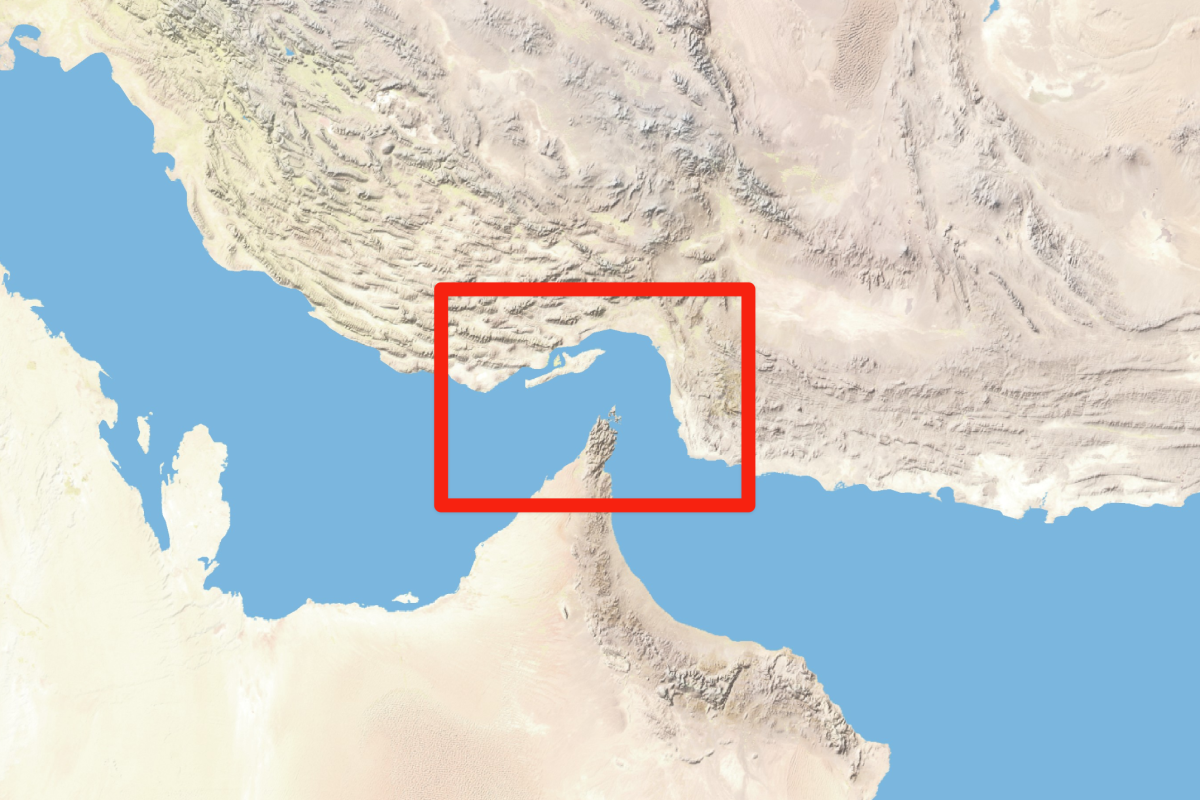
Iran threatened to close the Strait of Hormuz again if the U.S. Maintains its naval blockade, while nearly two dozen commercial ships abandoned a transit attempt despite Iran’s declared reopening of the waterway.
The U.S. Blockade, in effect since Monday afternoon German time, targets vessels bound for or leaving Iranian ports, according to Iranian parliamentary speaker Mohammed Bagher Ghalibaf, who warned the strait would not remain open if the blockade continues.
Iran had previously declared the strait navigable again after a Lebanon ceasefire between Israel and Hezbollah, allowing merchant ships and oil tankers to resume passage, but President Donald Trump said the U.S. Military would keep the blockade in place until agreements with Iran are fully concluded.
Trump added that negotiations with Iran would resume over the weekend, stating there are few significant differences remaining between the two sides.
Iranian naval commander Schahram Irani denounced the blockade as piracy and theft at sea, a characterization echoed by Iran’s judiciary-linked news agency Misan.
This follows our earlier report, Donald Trump claims Iran nuclear deal near as military action called a ‚little detour‘.
Meanwhile, Iranian state-linked media expressed skepticism about the strait’s reopening, with the Fars news agency, affiliated with the Revolutionary Guard, criticizing the silence of Iran’s Supreme National Security Council and negotiation team on platform X.
For more on this story, see Iran threatens to close Strait of Hormuz over US naval blockade.
The Mehr news agency reported that any decision to reopen the strait requires clarification and approval from Supreme Leader Ali Khamenei, who has not appeared publicly since being wounded in an attack on his father in February and is now reportedly incapacitated, leaving Iran’s security council as the de facto decision-making body.
In the night, a group of around 20 merchant vessels, including containerships, bulk carriers and tankers, abandoned their attempt to transit the strait, with most turning back according to ship movement data; three of the vessels were containerships operated by French shipping company CMA CGM, which declined to comment.
/wp:paragraph –> <!– wp:paragraph>The ships were part of the largest convoy heading toward the strait since the start of the Iran-U.S. Tensions, underscoring the sensitivity of maritime traffic to the ongoing standoff.
/wp:paragraph –> <!– wp:paragraph>A central point in the Washington-Tehran negotiations remains the disposition of Iran’s stockpile of highly enriched uranium, with Trump telling CBS News that U.S. Personnel would work jointly with Iran to remove the material and transport it to the United States.
/wp:paragraph –>Why did ships turn back despite Iran’s declaration of reopening the strait?
<!– wp:paragraph>The sources do not specify the exact reason for the vessels’ reversal, noting only that the cause remains unclear at this time.
/wp:paragraph –> <!– wp:heading>What is the status of Iran’s leadership in relation to the strait decision?
/wp:heading –> <!– wp:paragraph>Supreme Leader Ali Khamenei has not appeared publicly since being wounded in an attack on his father in February and is reportedly incapacitated, meaning Iran’s security council currently functions as the de facto authority on major state matters, including the strait’s status.
/wp:paragraph –>


