
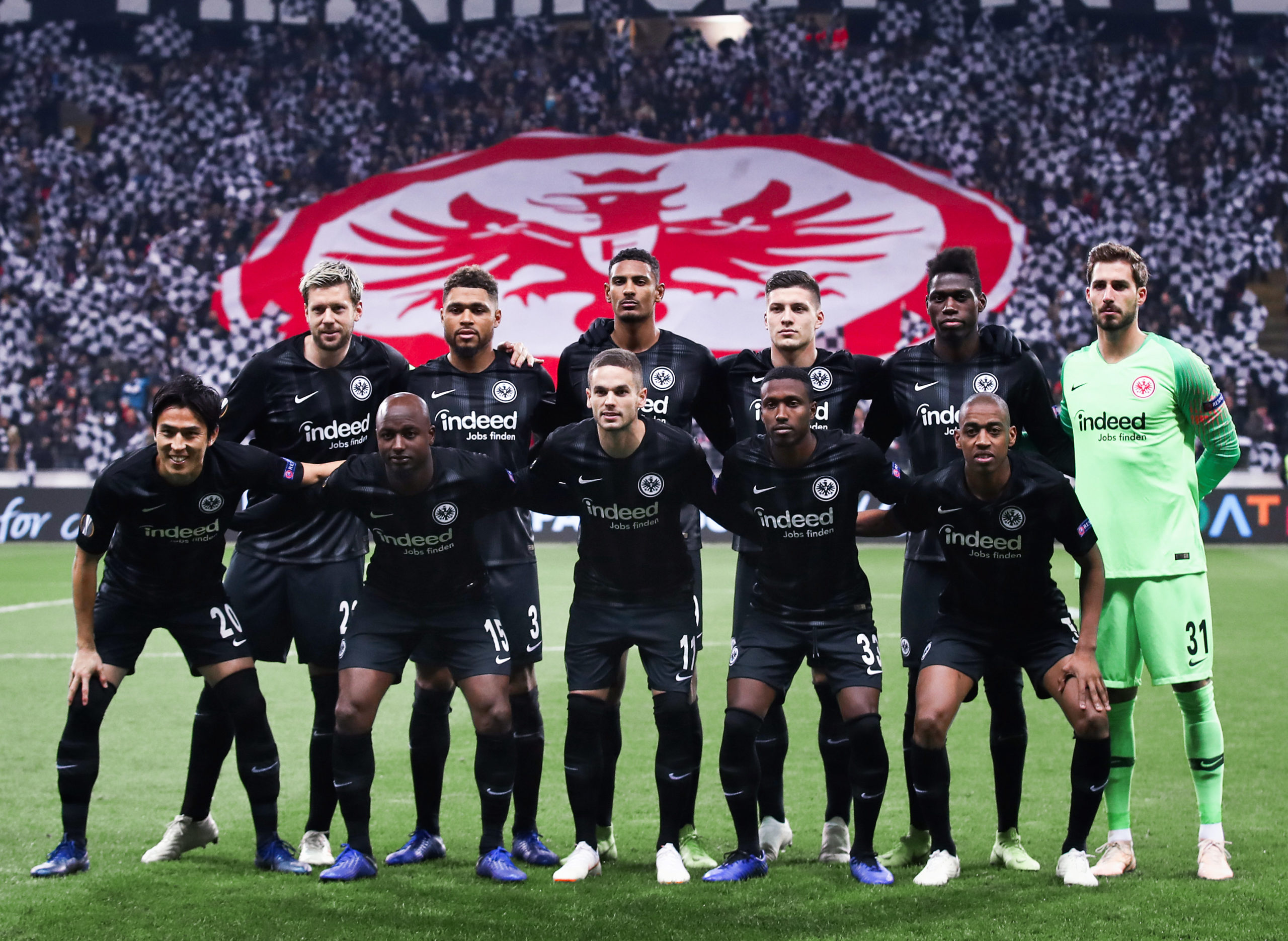
Markus Krösche sat in the fifth row of the Astor Film Lounge, chewing on nachos with guacamole, when the man on screen claimed to be an Eintracht fan because his father once said he was German and there’s a street named after him in Sachsenhausen.
The scene from the new ARD documentary “Inside Fußball – Wer kauft das Spiel?” drew an audible reaction from the room, where Eintracht’s sporting director sat beside club president Mathias Beck, DFB sporting director Andreas Rettig, and fan representatives — all gathered to preview a film that positions John Textor, the American investor behind Eagle Football Holdings, as a potential suitor for the club.
Textor, 60, told the camera he speaks no German but feels a ancestral pull to Frankfurt, citing the Textorstraße in Sachsenhausen as proof of his belonging — a claim that drew skepticism from Krösche, who later told reporters he had never met the investor and knows nothing of his intentions beyond what was shown in the documentary.
What unsettles Eintracht’s leadership isn’t just the awkward fanfare but the structure behind it: Textor’s model of multi-club ownership, through which he previously held stakes in Crystal Palace (sold last summer for around €200 million, or $215 million) and now eyes Frankfurt, is viewed internally as a threat to competitive integrity.
Krösche has warned publicly that such consortia distort talent markets by shuffling players between affiliated clubs, inflating prices and undermining sporting merit — a concern he voiced as recently as February at the Spobis Congress in Hamburg, where he argued majority stakes in multiple clubs endanger the very essence of football.
President Beck responded more directly, invoking the 50+1 rule that protects German clubs from external control, calling Textor’s interest a clear violation of the principle that members, not investors, must hold the decisive vote.
The irony is not lost on those inside the Commerzbank-Arena: a man who admits he doesn’t speak the language, bases his fandom on a street sign and a secondhand claim of heritage, now positions himself as a savior for a club whose identity is built on democratic ownership and local roots.
How the ARD documentary became an unintended platform for Textor’s advance
The club did not invite Textor to the screening; he inserted himself into the narrative through the film’s portrayal of him as a passionate German-connected investor, a framing Eintracht’s leadership says misrepresents both his ties and intentions.
Jan Strasheim, Eintracht’s media director, confirmed Krösche’s presence was due to the club’s featured role in the first episode — not to endorse any investor, but to participate in a journalistic project about football’s evolving ownership models.
Why multi-club ownership alarms Eintracht’s sporting leadership
For Krösche, the danger lies not in foreign capital per se, but in systems where one entity controls multiple teams and uses them as feeder channels — a practice he says has already driven transfer fees to unsustainable levels across Europe.

He pointed to Crystal Palace as an example: during Textor’s involvement, the club became a node in a network where talent movement served portfolio optimization rather than sporting development, a dynamic he believes would replicate in Frankfurt if Eagle Football Holdings gained influence.
The fear is not abstract: Eintracht’s recent success in developing young players like Omar Marmoush and Hugo Ekitike has made it a target, but its leadership insists any investment must preserve sporting autonomy — a condition multi-club models inherently jeopardize.
What Textor’s Crystal Palace exit reveals about his strategy
The sale of his Crystal Palace stake last summer for roughly €200 million suggests Textor may be rotating capital from established Premier League assets into Bundesliga clubs perceived as undervalued — a pattern consistent with Eagle Football Holdings’ broader approach of acquiring minority positions in multiple leagues.
Sources close to the investor say he views Frankfurt as a strategic gateway into German football, combining sporting potential with commercial upside — though Eintracht’s leadership maintains no formal approach has been made, and any such move would face immediate resistance under current governance.
How fan sentiment could shape the club’s response
Michael Gabriel, head of German fan projects, attended the screening and represents a constituency deeply skeptical of investor-led models that prioritize financial returns over cultural continuity — a voice Eintracht’s leadership cannot ignore, even as they navigate complex financial pressures.
The emotional reaction in the Astor Film Lounge wasn’t just disbelief at Textor’s heritage claim; it was recognition of a broader tension: whether Frankfurt can resist the gravitational pull of global investment models without compromising the very identity that makes it distinctive.
Did John Textor make a formal bid for Eintracht Frankfurt?
No. Both sources confirm Textor has not submitted an offer or entered negotiations; his interest was revealed solely through his appearance in the ARD documentary, where he described himself as a fan and potential investor.
Could Eintracht Frankfurt accept investment while preserving the 50+1 rule?
Yes, in principle. The club could accept minority investment that does not confer control, but leadership has repeatedly warned that multi-club ownership structures — even non-controlling stakes — pose sporting risks by enabling player shuffling and distorting competition.
Why does Textor cite a street in Sachsenhausen as proof of his German connection?
He claims the Textorstraße in Sachsenhausen reflects ancestral ties, though he admits he does not speak German and says his father told him he was German — a justification Eintracht’s sporting director called unfamiliar and unconvincing given their lack of prior contact.
What alternative investment models has Eintracht considered?
The sources do not detail specific alternatives, but the club’s emphasis on 50+1, sporting integrity, and fan engagement suggests any future funding would prioritize preserving member control and rejecting models tied to multi-club consortia.
Verwandte Artikel


