
)
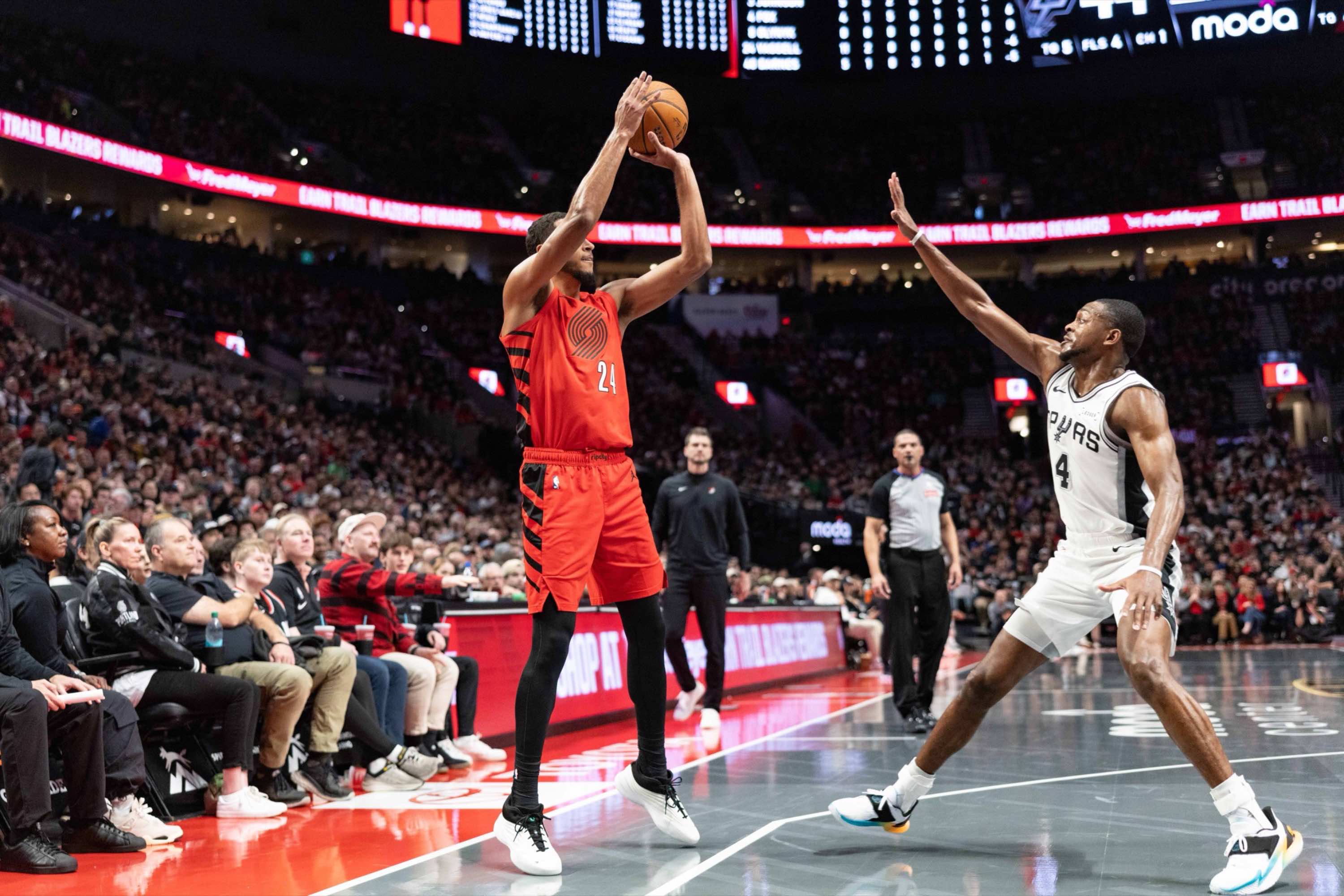
The Portland Trail Blazers defeated the San Antonio Spurs 112-107 in Game 2 of their Western Conference playoff series on April 21, 2026, evening the series at 1-1 after losing Game 1 by 15 points.
How the Trail Blazers secured the win in the final minutes
With the game tied at 105 late in the fourth quarter, Portland’s Anfernee Simons hit a go-ahead three-pointer with 2:18 remaining, followed by a steal and fast-break layup by Scoot Henderson that extended the lead to four. San Antonio missed three consecutive shots in the final minute, including a contested jumper by Victor Wembanyama that rimmed out with 12 seconds left, sealing the victory for Portland.
What the Spurs’ offensive struggles revealed
San Antonio shot just 38% from the field and committed 18 turnovers, many stemming from Trail Blazers pressure that forced rushed decisions in the half-court. Wembanyama finished with 28 points and 12 rebounds but shot 9-for-24, while the Spurs’ bench contributed only 22 points compared to Portland’s 41, highlighting a depth disparity that proved critical in the closing stretch.

For more on this story, see NBA Play-In Tournament Determines Final Playoff Berths for Four Teams.
Why this result shifts the series dynamics
Portland’s ability to win on the road after a home loss in Game 1 undermines San Antonio’s assumption of home-court advantage as a series decider, especially given the Spurs’ 15-point loss in Game 1 raised concerns about their adjustability. The Trail Blazers now hold momentum heading into Game 3 in San Antonio, where they have won two of their last three visits dating back to the regular season.
Did any Spurs players exceed expectations despite the loss?
Victor Wembanyama recorded his second straight 20-point, 10-rebound game in the playoffs, becoming the first Spurs rookie since Tim Duncan in 1998 to post consecutive double-doubles in postseason play.
What adjustment did the Trail Blazers make that proved decisive?
Portland switched to a more aggressive trap on San Antonio’s pick-and-roll in the second half, increasing their deflections from 8 in the first half to 14 after halftime, which directly led to 10 fast-break points in the final quarter.
Auch interessant


