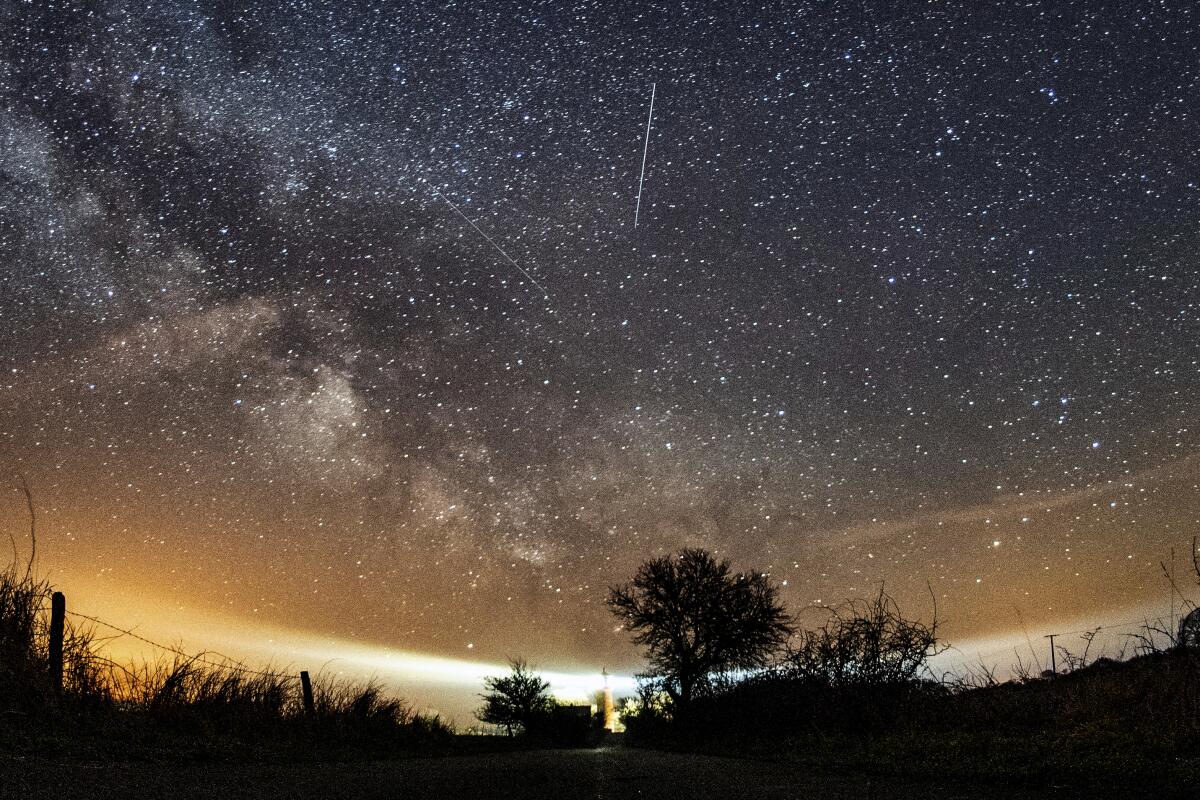
The Lyrid meteor shower reaches its peak tonight, with astronomers predicting 15 to 20 shooting stars per hour under clear skies across Germany, though visibility remains highly dependent on local weather and light pollution.
The shower, caused by Earth passing through the dust trail of comet C/1861 G1 Thatcher, began on April 14 and will continue until April 30, with the maximum activity expected between 10 p.m. On April 22 and dawn on April 23. While theoretical models suggest up to 20 meteors per hour, experts caution that this number assumes perfect conditions — a high radiant, no cloud cover, and minimal artificial light — which are rarely met in practice.
Carolin Liefke of the Haus der Astronomie in Heidelberg emphasized that even under less-than-ideal circumstances, observers are likely to see at least a few meteors: “Die ein oder andere Sternschnuppe kriegt man sicherlich zu Gesicht.” She noted that this year’s conditions are favorable compared to recent years, with the waning crescent moon posing little interference after midnight and the radiant — located between the constellations Lyra and Hercules — rising higher in the sky as the night progresses, improving viewing odds despite a potential drop in meteor frequency later on.
Visibility forecasts from the German Weather Service indicate the best chances for clear skies lie south of the Harz Mountains, in central and southern Germany, while northern regions from Ostfriesland to Mecklenburg-Vorpommern may face scattered cloud and fog cover. Observers are advised to seek dark, open locations away from city lights, allow their eyes 20–30 minutes to adjust to darkness, and avoid looking at phones or other bright screens during the wait.
For more on this story, see Lyrid meteor shower peaks April 22-23 2026 with optimal pre-dawn viewing.
Uwe Pilz of the Vereinigung der Sternfreunde reinforced that location within Germany matters less than sky darkness and weather, recommending rural areas or mountainous regions for optimal viewing. He also reminded enthusiasts to dress warmly, as frost is expected nationwide overnight, with temperatures near freezing in many areas.
The Lyrids, while less prolific than the August Perseids — which can produce up to 100 meteors per hour — are notable for their historical reliability and swift entry speed: meteoroids burn up in the atmosphere at approximately 49 kilometers per second, creating bright, fleeting streaks of light. Last year’s display was hampered by a bright moon and widespread cloud cover, making this year’s prospects notably better for those willing to venture out after dark.
Do I need special equipment to see the Lyrids?
No — the Lyrids are visible to the naked eye under dark, clear skies. Binoculars or telescopes actually reduce your field of view and are not recommended for meteor watching.

What if it’s cloudy where I live?
Check local forecasts — the German Weather Service predicts clearer conditions in southern and central Germany, while northern areas may see persistent cloud cover. Consider traveling to a nearby region with better prospects if possible.
Auch interessant