
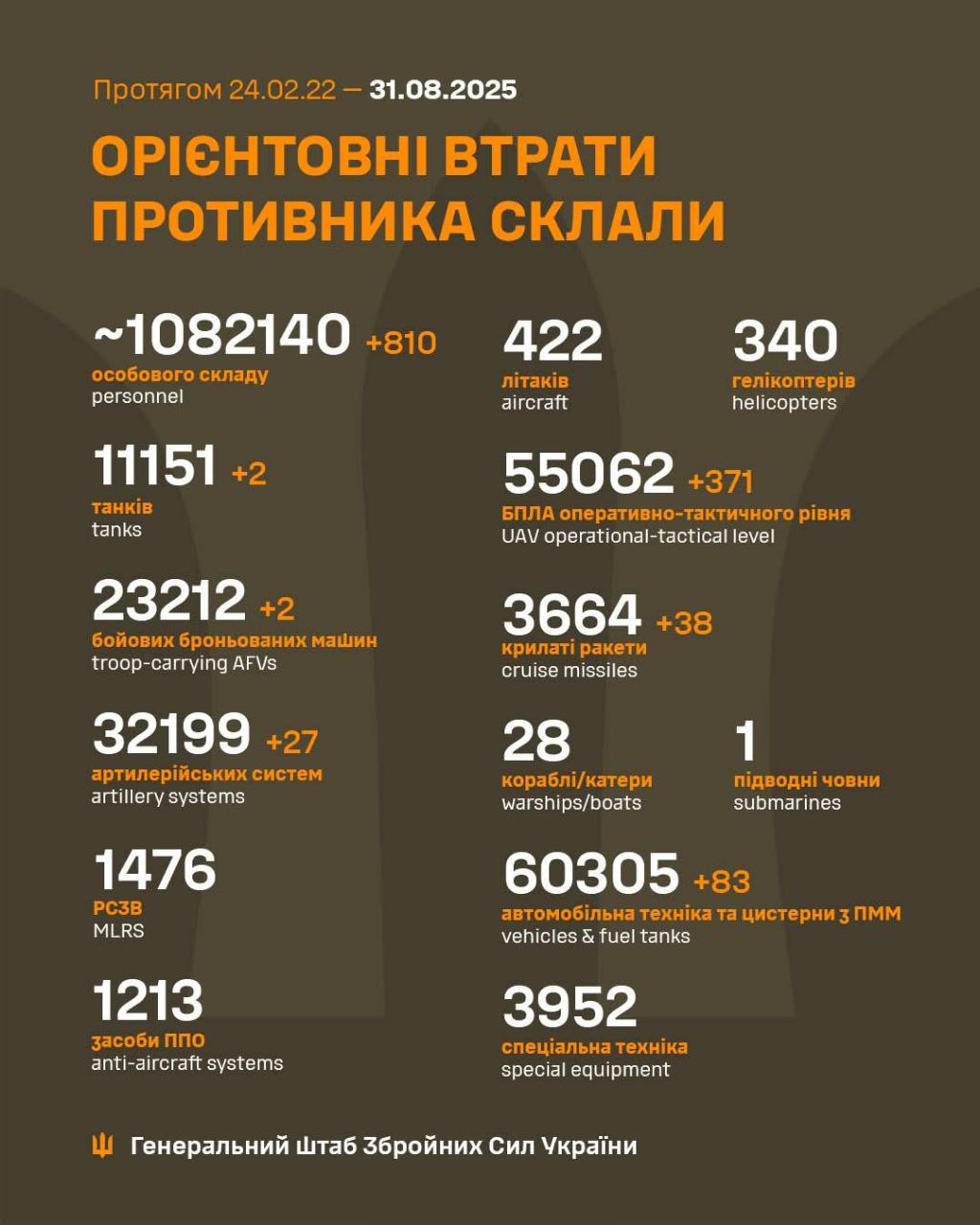
810 Soldiers in 24 Hours: The Numbers Behind Russia’s Offensive
The Ukrainian General Staff’s latest reports indicate significant Russian losses in recent operations. Over a single day, 810 Russian soldiers were reported killed or wounded, a figure that aligns with a broader trend of rising casualties. The most intense fighting occurred near Pokrowsk, where Ukrainian forces repelled 55 Russian assaults, and in Huljaipole, which saw 37 separate attacks. Along the Slowjansk axis, Russian offensives made minimal progress, according to official updates from the General Staff.

These numbers reflect a period of sustained combat. Over the past month, Ukrainian military reports have consistently documented daily Russian losses exceeding 700. While the scale of these losses is notable, the territorial gains have remained limited. Ukrainian forces have maintained control of key positions, with Russian advances measured in small increments rather than significant breakthroughs.
The financial costs of the conflict are also becoming more apparent. Recent analyses indicate that Russia’s military expenditures represent a substantial portion of its economic output. Ukraine’s defense budget, while also significant, has been supported by international assistance, allowing for a more diversified allocation of resources. The difference in economic capacity between the two sides has become a factor in the war’s longer-term dynamics.
“Holy War” and the Limits of Ideological Escalation
Recent statements from Russian officials and allies have framed the conflict in increasingly ideological terms. One prominent figure described the war as a “holy war,” a phrase that aligns with the Kremlin’s broader efforts to present the invasion as part of a larger struggle. This rhetoric has been used in various forms in past conflicts, but its current application has drawn particular attention given the war’s duration and intensity.
The use of religious language in this context appears intended to reinforce certain narratives. Domestically, it may serve to align the conflict with themes of cultural and moral resistance, which have been emphasized in official communications. Internationally, such framing could be aimed at appealing to audiences beyond Russia’s immediate sphere of influence. However, the effectiveness of this messaging remains uncertain, particularly as the war’s human and material costs continue to mount.
For Ukraine, this ideological escalation presents both challenges and potential opportunities. On one hand, it suggests that Russia is preparing for a prolonged conflict, reducing the likelihood of near-term negotiations. On the other, it may expose inconsistencies in the narrative, particularly if battlefield realities fail to align with the stated objectives. As the war continues, these contradictions could influence both domestic and international perceptions of the conflict.
Ukraine’s Defensive Playbook: Air Defenses, Laws, and the Cost of Resilience
In response to Russia’s renewed offensive, Ukraine has prioritized strengthening its air defenses. Recent attacks involved 94 drones, primarily Shahed models, launched from multiple locations including Kursk, Orjol, Schatailowo, and occupied Crimea. Ukrainian forces intercepted 74 of these drones, though the remaining 20 struck targets across 15 locations. Debris from downed drones caused additional damage in 11 areas, highlighting the challenges of defending against such attacks.
Recent strikes in Odessa resulted in damage to civilian infrastructure, including a residential high-rise and a hotel in the city center. Ten people were injured, among them two children. While Ukraine’s interception rate of 78% demonstrates progress, the attacks underscore the persistent risks to civilian areas. Russia has adapted its tactics, deploying drones in larger numbers and from multiple directions, which has tested Ukraine’s defensive capabilities.
Beyond military measures, Ukraine has taken steps to address the legal and economic dimensions of the war. President Volodymyr Zelensky submitted two draft laws to parliament, extending martial law and mobilization for another 90 days beginning May 4. These measures, which were widely anticipated, reflect the ongoing nature of the conflict. Zelensky’s statements emphasized that the war’s end would be the only condition for lifting martial law, reinforcing the government’s focus on sustained resistance.
The economic impact of the war remains a pressing concern. While Ukraine’s defense spending is substantial, international aid has helped mitigate some of the financial strain. However, the country’s GDP growth has slowed, and inflation remains a persistent issue. The longer the conflict continues, the more these economic pressures may test Ukraine’s ability to maintain its current level of resilience. For now, the immediate priority remains the battlefield, where each intercepted drone and repelled assault contributes to the broader effort.
The Drone War’s New Front: Romania and the Escalation Beyond Ukraine
The conflict’s effects are increasingly extending beyond Ukraine’s borders. In a recent incident, a Russian drone crashed in the Romanian city of Galati, near the Danube River border. The drone, part of a larger swarm targeting Ukrainian infrastructure, struck a residential building and a power line before failing to detonate. Romanian authorities responded by evacuating a 200-meter radius around the crash site, and British fighter jets stationed at a nearby NATO base were scrambled.
This was not an isolated event. Romania has reported multiple instances of Russian drones or debris entering its territory, particularly near the Danube port of Reni, which has been frequently targeted by Russian strikes. The Romanian Defense Ministry condemned these incidents as violations of international law, emphasizing the risks they pose to regional security. The statements also served as a reminder that the war’s geographic scope is expanding, even if the primary fighting remains within Ukraine.
The drone crash in Galati highlighted NATO’s growing role in managing the conflict’s periphery. British jets operating from Romanian soil have been authorized to intercept Russian drones over Ukrainian territory, a development that reflects the alliance’s efforts to counter Russian aggression while avoiding direct escalation. For Russia, such incidents provide material for its narrative of Western involvement. For Ukraine, they offer reassurance of continued support from its allies.
The broader implications of these developments remain uncertain. The extent to which the war’s effects will spread may depend on the outcomes of Russia’s current strategy. If recent patterns of high casualties and limited gains persist, the risk of further spillover—both militarily and politically—could increase. In the coming weeks, key indicators to watch include Russia’s ability to sustain its current operational tempo, Ukraine’s capacity to adapt its air defenses, and the resonance of the ideological framing surrounding the conflict.
For now, the war remains characterized by a cycle of escalation, with neither side showing signs of backing down. The focus remains on the immediate challenges, even as the conflict’s broader consequences continue to unfold.
Auch interessant


