
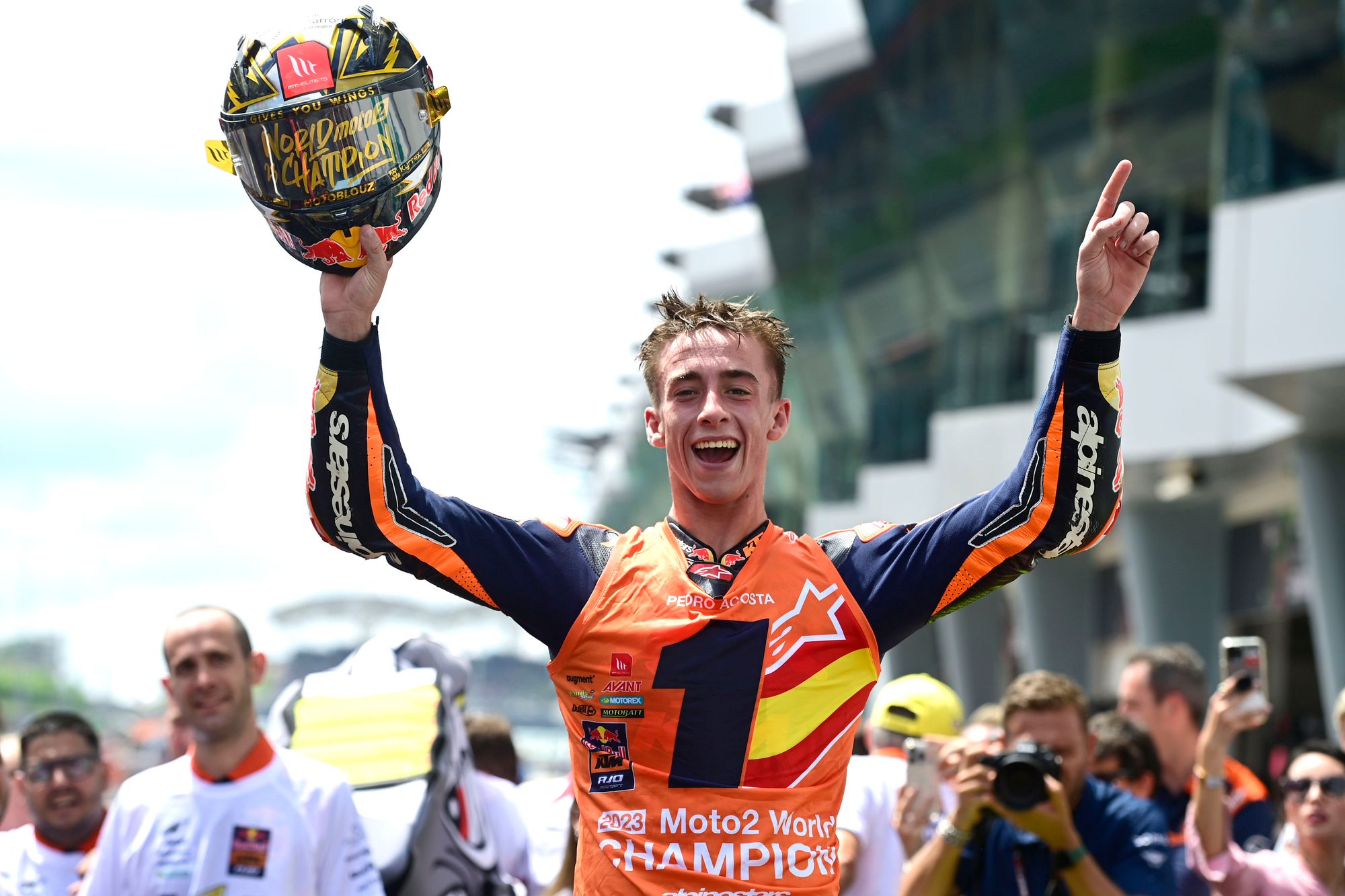
Pedro Acosta set the fastest time in MotoGP FP2 at Jerez on April 25, 2026, edging out Marc Marquez by 0.042 seconds on a drying track.
Toprak Razgatlioglu’s save became the session’s defining moment
While Acosta led the timesheets, the most discussed incident involved Toprak Razgatlioglu, who avoided a high-speed crash after losing rear traction exiting Turn 4. His corrective slide, captured on trackside cameras, prevented a potential highside and drew immediate praise from riders and commentators for its precision under low-grip conditions.
Marc Marquez secured pole position in qualifying despite early struggles
Marquez qualified on pole for the race, overcoming a unhurried start in FP2 where he admitted to lacking confidence in the front tire. He cited improved feel during Q1 as the track dried and credited the medium compound rear tire for helping him push toward the end of the session.
For more on this story, see Alex Marquez leads Jerez practice with 1:36.267 lap as Acosta falls to 15th.
Johann Zarco acknowledged Marquez’s dominance while expressing belief in his own race pace
Zarco, who qualified second, said he believed he could beat Marquez under the mixed conditions but lost time in the final lap due to a rear-wheel slide in the last corner. He noted that Marquez’s awareness of his pace leads the Spaniard to monitor him closely during sessions.
Why did Razgatlioglu’s incident draw so much attention?
Razgatlioglu’s save stood out because it occurred at high speed on a partially wet surface, where a mistake could have resulted in a serious crash. Riders emphasized that regaining control without high-siding requires split-second timing and feel, especially on a MotoGP bike with limited electronic intervention during slides.
This follows our earlier report, Alex Marquez Leads Jerez Session as Marc Marquez Admits Limited Pace, Bagnaia Crashes Early.
How did track evolution affect the session outcome?
The drying circuit meant early FP2 laps were run on damp asphalt, favoring riders who could build confidence gradually. As the track improved, those who adapted their braking and acceleration points fastest — like Acosta and Marquez — gained the advantage, while others struggled with inconsistent grip levels between laps.


