
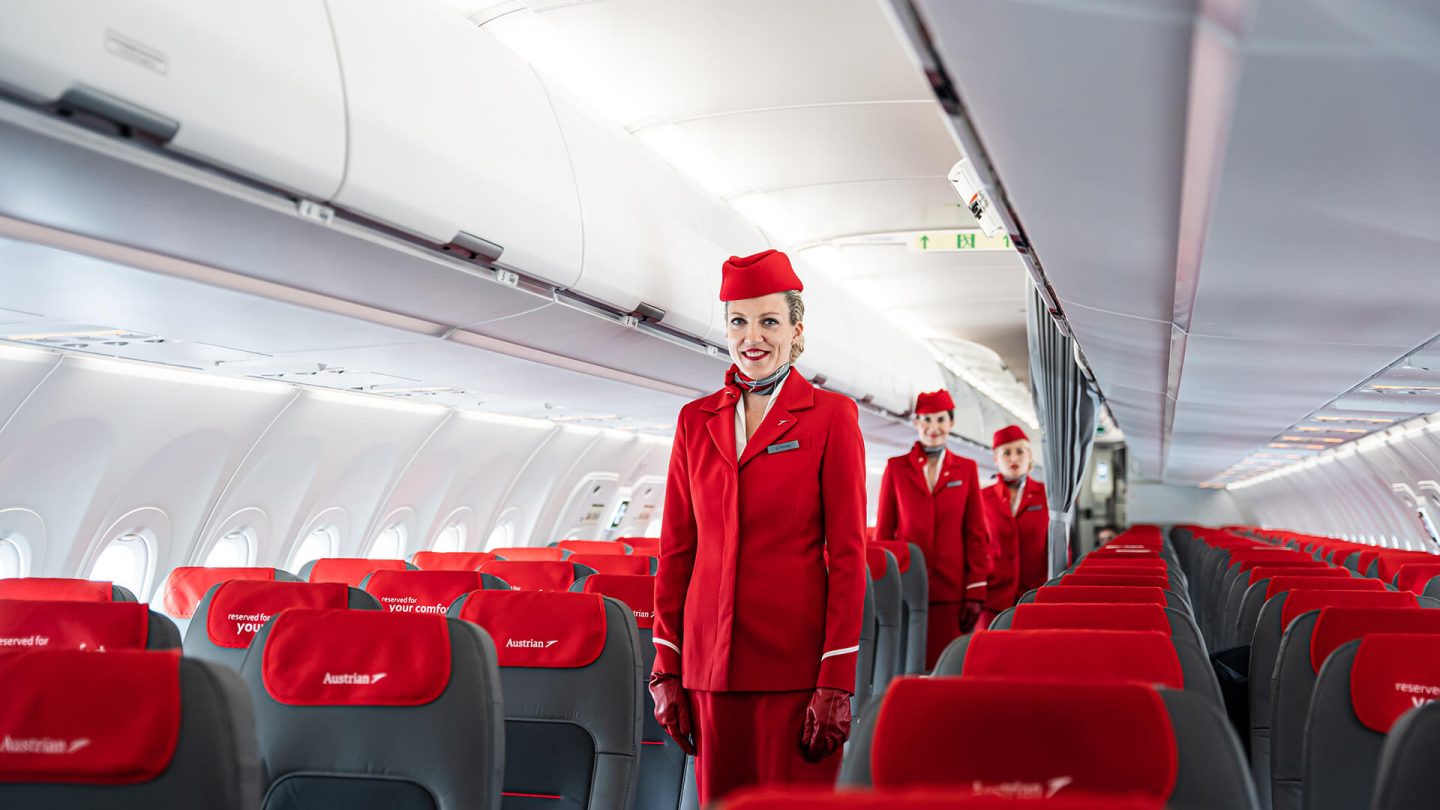
An Austrian Airlines Airbus A320 at Berlin Brandenburg Airport was grounded on Thursday morning after an emergency slide deployed during a struggle to remove a deportee who had begun causing a disturbance in the rear cabin.
The flight, scheduled to depart for Vienna at 7 a.m., was delayed by more than two hours as all passengers were evacuated and the aircraft inspected. Police officers accompanying the man for deportation attempted to escort him from the plane after he became disruptive, but a scuffle near the forward door triggered the slide’s inflation, forcing an full evacuation.
Both BILD and rbb24.de confirmed the airline’s statement that the passenger had drawn attention through loud behavior, prompting the decision to remove him. The unintended deployment of the slide added a rare mechanical complication to what is already a frequent point of failure in Germany’s deportation system.
According to federal government data cited in BILD, 1,593 deportations involving federal police were canceled last year — roughly seven percent of the 22,787 total deportations recorded. Resistance, both active and passive, accounts for a significant portion of these failures, alongside missing documentation and medical emergencies.
The incident at BER underscores how individual acts of defiance can disrupt tightly scheduled operations, turning a routine removal into a public spectacle with cascading delays. For the other passengers, it meant an unexpected return to the terminal and hours of waiting; for authorities, it highlights the persistent gap between policy intent and operational reality in enforcing removal orders.
What the delay meant for connecting travelers
The ripple effect of the grounded aircraft extended beyond the Vienna-bound flight, as gate reassignments and crew rescheduling strained morning operations at BER. Airlines reported knock-on delays to regional and international departures, particularly affecting passengers with tight connections in Vienna’s hub.
Why deportations fail more often than they succeed
The high rate of aborted removals reflects systemic fragility: individuals facing deportation often lack valid travel documents, resist physically or through non-cooperation, or develop last-minute medical claims that halt proceedings. Each failed attempt consumes significant state resources without advancing the core objective.
How police escorts balance safety and procedure
Officers tasked with transporting deportees must navigate unpredictable behavior while adhering to strict use-of-force guidelines, a tension that increases the risk of incidents like the one at BER, where restraint efforts inadvertently activated safety equipment.

Was the passenger injured during the incident?
Neither source reported injuries to the deportee, passengers, or officers involved in the removal attempt.
Will the airline seek compensation for the delay and disruption?
The sources do not indicate whether Austrian Airlines plans to pursue financial recovery for the two-hour delay or the costs associated with the slide repacking and aircraft inspection.
Verwandte Artikel


