
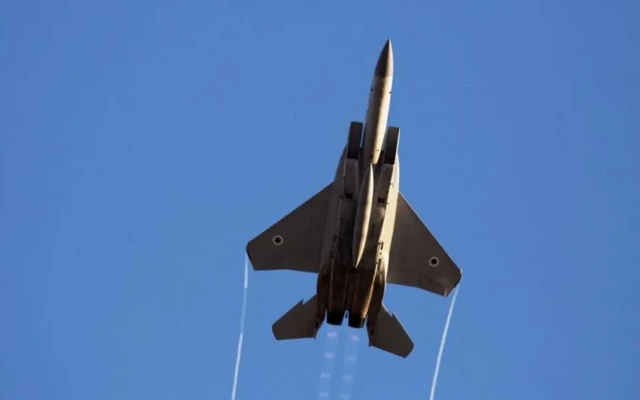
The Tigre helicopter, initially developed for ground assault missions, has been deployed in the Gulf to counter drone swarms. Its 30mm cannon, originally intended for engaging ground targets, is now being used against unmanned aerial threats. According to defense analysts, the cost disparity between advanced missiles and these drones has prompted a shift in how such threats are neutralized. French military sources indicate that traditional air-defense systems, while effective, may not be sustainable against large numbers of low-cost drones.
The Cost of a Shot: When a Missile Becomes a Liability
The Rafale jet, a multirole fighter, has been adapted to engage drones using its onboard cannon rather than relying solely on expensive missiles. This adjustment reflects a broader strategic consideration: the need to balance effectiveness with affordability. Iranian-made drones, which defense officials describe as relatively inexpensive to produce, have highlighted the financial strain of using high-end munitions against such targets. The economic imbalance has led to a reassessment of how air forces allocate resources in modern conflicts.

The adaptation involved modifications to the Rafale’s fire-control system, allowing pilots to use the aircraft’s 30mm cannon for engaging drones. This approach requires pilots to operate closer to their targets, a calculated risk that military planners have deemed acceptable given the nature of the threat. While the tactic introduces new operational considerations, it has been implemented as part of a broader effort to enhance flexibility in counter-drone operations.
The Tigre helicopter has also played a key role in these adjustments. In recent operations, it successfully intercepted drones using its 30mm cannon, a method now formally integrated into France’s air-defense strategy. The helicopter’s ability to receive real-time targeting data from radar and other assets has improved its effectiveness in counter-drone missions. This integration was completed in a matter of weeks, demonstrating the military’s ability to rapidly adapt existing platforms to emerging threats.
Lasers, Hellfires, and the Future of Asymmetric Warfare
The adaptations extend beyond cannon-based engagements. France is developing a laser-guided rocket variant designed for use with both the Tigre and Rafale, offering a middle-ground option between the cost of missiles and the proximity required for cannon fire. Initial testing is underway, with plans for deployment if the system proves effective. Additionally, the Reaper drone, typically used for surveillance, has been repurposed to fire Hellfire missiles—originally designed for ground strikes—at aerial targets. This conversion was completed in a short timeframe, according to defense officials.
General Pierre Schill, in remarks to Le Point, highlighted the tactical advantages of the Tigre’s mobility. Unlike fixed-wing aircraft, the helicopter can operate closer to front lines, intercepting drones before they reach their intended targets. This forward deployment is particularly valuable in regions where drone swarms can overwhelm conventional air defenses. The rapid integration of the Tigre into the air-defense network reflects a broader emphasis on agility and responsiveness in modern warfare.
The developments in France have drawn attention from other nations facing similar challenges. The U.S. and Israel have explored comparable tactics, but France’s approach stands out for its speed and practicality. Rather than investing in new platforms or lengthy procurement processes, the focus has been on repurposing existing assets to address immediate threats. This strategy underscores a growing recognition that adaptability may be as critical as technological superiority in future conflicts.
What This Means for Defense Budgets—and the Next Conflict
The economic implications of these adaptations are significant. Traditional air-defense systems, while highly effective, can be prohibitively expensive when used against large numbers of low-cost drones. The shift toward more affordable engagement methods reflects a broader trend in military planning: the need to balance capability with sustainability. In prolonged conflicts, the ability to maintain operational tempo without exhausting resources may prove decisive.

However, challenges remain. The use of cannons for drone engagements requires pilots to operate in closer proximity to threats, a risk that may not be feasible in all scenarios. The Tigre’s success in the Gulf does not guarantee effectiveness against more advanced or faster drones. Similarly, while the repurposing of Hellfire missiles offers a temporary solution, it is not a long-term replacement for dedicated counter-drone systems.
The broader trend is clear: the reliance on expensive missiles as the primary counter-drone tool is evolving. The new approach prioritizes flexibility, with systems that can be quickly adapted to new missions. For France, this has meant transforming its Rafales and Tigres into versatile platforms capable of addressing a range of threats. For other nations, it serves as a reminder that the next conflict may be won not by the most advanced weapons, but by those that can be deployed efficiently and affordably.
As these adaptations continue, the response to low-cost drones will likely emphasize cost-effective solutions. Whether through cannon fire, laser-guided rockets, or repurposed missiles, the goal is to neutralize threats without incurring disproportionate expenses. This shift in strategy reflects a growing recognition that modern warfare demands both innovation and pragmatism.
Auch interessant


