
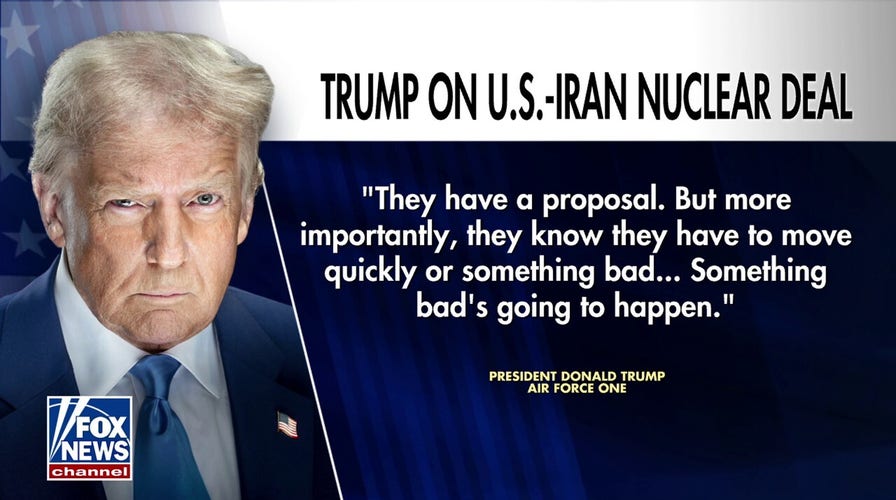
The diplomatic channel between Washington and Tehran has reopened as both sides navigate the current geopolitical landscape. According to reporting from n-tv.de, the Iranian government has submitted a new proposal intended to end the conflict in the Middle East. The offer was transmitted via Pakistan, acting as a mediator, though the specific terms of the proposal have not been disclosed.
The response from the White House was immediate and cautious. Writing on Truth Social, Donald Trump stated that he would review the plan bald
(soon), but he quickly tempered expectations for a rapid resolution. The U.S. President indicated that he found it difficult to imagine the offer would be acceptable, citing a fundamental requirement: that the Iranian leadership must account for its actions over the last nearly five decades.
The Pakistani Conduit and the Truth Social Wall
The use of Pakistan as a mediator indicates that Tehran is utilizing an external channel to communicate its proposal to the current U.S. administration. However, this diplomatic gesture has been met with a cautious response from President Trump. The U.S. leader has not only questioned the viability of the new offer but has also cast doubt on the internal cohesion of the Iranian government.
Speaking on Friday, Trump stated, Im Moment bin ich nicht zufrieden mit ihrem Angebot
(At the moment I am not satisfied with their offer), and characterized the leadership in Tehran as uneinig
(disunited) regarding the strategy to end the conflict. This public dismissal follows the rejection of a previous proposal earlier in the week. According to Axios, that earlier attempt by Tehran sought to postpone discussions regarding the Iranian nuclear program to a later date—a condition that was not acceptable to the U.S. administration.
The disconnect is not merely about the timing of nuclear talks, but about the nature of the concessions required. Trump has framed the current stalemate as a matter of historical accountability, suggesting that the diplomatic process cannot move forward until a specific threshold of penalty is met.
A 47-Year Debt
Central to the U.S. position is the belief that diplomacy cannot be decoupled from the historical record of Iranian foreign policy. President Trump has explicitly tied the acceptance of any peace deal to a retrospective cost. He argued that the leadership in Tehran must pay a ausreichend hohen Preis
(sufficiently high price) for what it has done to der Welt in den vergangenen 47 Jahren
(the world in the past 47 years).
For more on this story, see Trump Extends U.S.-Iran Ceasefire Then Threatens Military Action Over Hormuz Blockade.
„Ich kann mir aber nicht vorstellen, dass er annehmbar wäre – angesichts dessen, dass der Iran noch keinen ausreichend hohen Preis für das bezahlt hat, was er der Menschheit und der Welt in den vergangenen 47 Jahren angetan hat“ Donald Trump, US President
This insistence on a price
emphasizes the U.S. view that the negotiation must account for historical actions. By referencing a 47-year window, the administration links the current diplomatic process to a long-term timeline of events since the late 1970s, rather than focusing solely on current geopolitical tensions or the specifics of the nuclear deal.
The Hormuz Blockade and the Kuwaiti Oil Freeze
While diplomatic messages travel through Islamabad, the physical reality on the ground is shifting toward military consolidation. The Iranian parliament is currently preparing legislation that would place the Strait of Hormuz—one of the world’s most critical maritime corridors—under the full authority of the armed forces. This move signals a willingness to use the strait as a strategic lever against the West.
The consequences of this posture are already manifesting in global energy markets. In a development not seen since the Gulf War in 1991, Kuwait exported zero barrels of crude oil in April 2026. According to the analysis portal TankerTrackers.com, this total cessation of exports was the direct result of the blockade of the Strait of Hormuz. While Kuwait continues to produce oil and store it or process it into refinery products, its ability to move raw crude to international markets has been completely frozen.
This follows our earlier report, Macron blames Hezbollah for French peacekeeper death in Lebanon.
This economic pressure is mirrored by a credible threat of renewed kinetic action. In West Palm Beach, Florida, President Trump told journalists that he does not rule out a resumption of attacks on Iran, stating that the possibility exists. This creates a volatile environment where diplomatic offers are being made even as the military infrastructure for escalation is being reinforced on both sides.
Tehran’s Strategic Hedging
Faced with the rejection of their proposals, Iranian officials are employing a dual-track strategy. According to the state news agency Irna, leading politicians in Tehran are keeping beide Optionen
(both options) open. This approach combines a stated willingness to engage in negotiations with a simultaneous emphasis on military resolve.
This dual-track approach allows Tehran to maintain a stated willingness to negotiate while simultaneously emphasizing its military resolve. Vice Foreign Minister Kasem Gharibabadi underscored this position on Saturday, asserting that the Ball im Feld der USA
(ball is in the USA’s court). By shifting the burden of the next move to the White House, Tehran is attempting to frame the current stalemate as a result of U.S. intransigence rather than Iranian failure.
The tension remains centered on two opposing definitions of peace: one that views it as a negotiated settlement of current disputes, and one that views it as a consequence of a paid penalty for past actions.
Observers should now monitor whether the U.S. administration identifies any specific „price“ that would make the new proposal acceptable, and whether the Iranian parliament formally codifies the military’s control over the Strait of Hormuz, which would further diminish the space for diplomatic maneuvering.
Auch interessant


