
Robert Bosch GmbH has secured a testing license in China for its Level 3 automated driving system, marking a pivotal step in its strategy to leapfrog competitors by embedding artificial intelligence across every software layer rather than relying on rigid, rule-based programming.
The approval, granted in March 2026, allows Bosch to trial its system in real-world traffic in Wuxi using the Chery Exeed ES as a test vehicle. This represents a significant escalation from its current Level 2 driver assistance offerings, where the driver must remain constantly ready to grab control. At Level 3, the vehicle assumes responsibility in specific conditions — such as highway driving — permitting the driver to remove hands from the wheel and eyes from the road under defined parameters.
Bosch’s approach centers on deploying AI in every software component, a departure from earlier attempts by automakers and suppliers that faltered due to the unpredictability of real-world traffic. The company argues that only AI-driven flexibility can handle edge cases, while a redundant safety architecture ensures fallback systems activate instantly if any primary function fails. The target is reliable operation up to 120 km/h, even in poor visibility down to 300 meters.
The system does not merely maintain lane position but autonomously initiates lane changes and modulates speed through integrated control of propulsion, braking, and steering. Bosch positions this as proof of its end-to-end capability, offering both seventh-generation radar hardware and proprietary AI algorithms to manufacturers seeking a single-source solution for higher automation.
Markus Heyn, head of Bosch Mobility, emphasized the firm’s vertical integration: „We have know-how across all vehicle domains — from powertrain to software — making us an ideal partner for scaling Level 3.“ He added that insights gained in China would be transferred globally, with the goal of becoming a preferred supplier for both Western and Chinese automakers.
Stefan Hartung, Bosch’s CEO, framed the move as a strategic advantage in adapting to regional conditions while maintaining global performance: „Those who can tailor supply chains to local needs and still deliver world-class technology hold a clear edge.“ This comes amid a notable market shift: BMW and Mercedes-Benz, which previously offered Level 3 systems, have temporarily withdrawn them due to the high cost of required hardware, particularly LiDAR and redundant computing units.
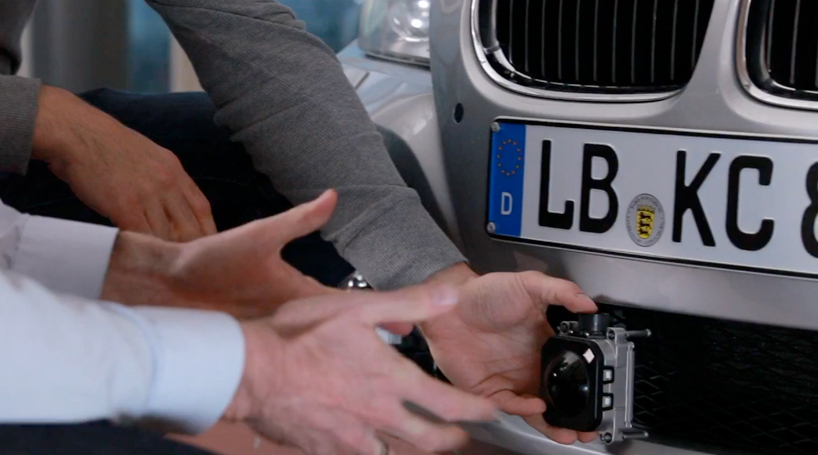
Bosch’s timing is deliberate. By avoiding expensive LiDAR in favor of radar and camera-based sensing augmented by AI, the company aims to undercut competitors on cost while maintaining performance. The firm insists its system is not China-only, citing Europe and the U.S. As attractive markets for future deployment, especially on congested urban expressways where drivers could reclaim time otherwise lost to fatigue.
How does Bosch’s Level 3 system differ from current Level 2 driver assistance?
Unlike Level 2 systems, where the driver must continuously monitor traffic and be ready to intervene, Bosch’s Level 3 allows the vehicle to take full responsibility in specific scenarios like highway travel, enabling hands-off and eyes-off operation under defined conditions such as speeds up to 120 km/h and visibility down to 300 meters.
Why are BMW and Mercedes-Benz pulling back their Level 3 offerings while Bosch is advancing?
BMW and Mercedes-Benz have temporarily halted their Level 3 systems due to the high cost of hardware, especially LiDAR sensors and redundant safety components, whereas Bosch aims to deliver comparable functionality using AI-enhanced radar and camera systems to reduce reliance on expensive sensors.


