
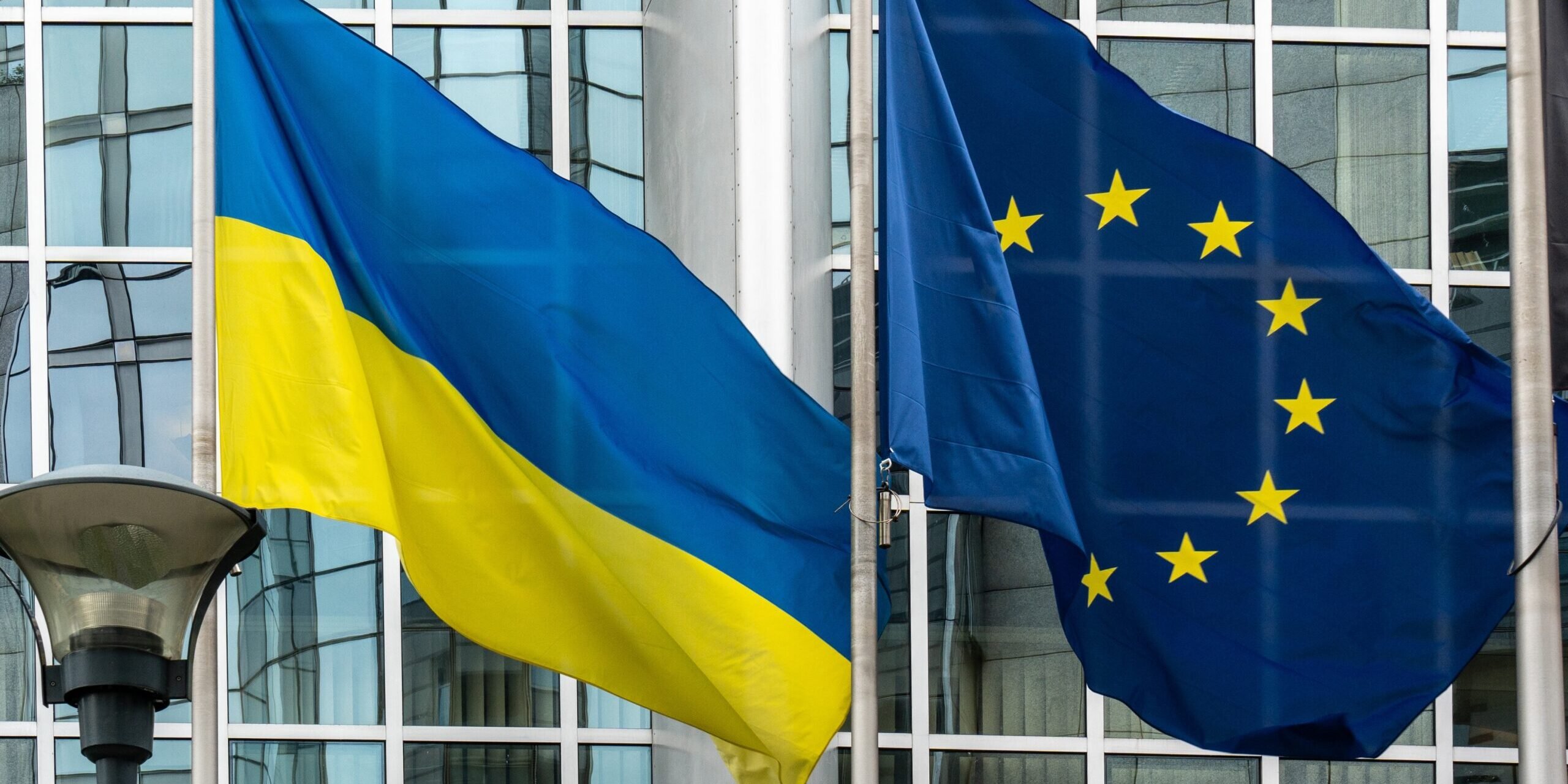
The EU’s Accession Paradox
The European Union has long maintained that it does not admit countries actively involved in armed conflict. This principle is enshrined in the Copenhagen Criteria, which set the standards for membership. A recent statement from a German official emphasized that the war in Ukraine must end before the country could be considered for accession. While this position aligns with existing EU policy, it has reignited debates about how the bloc might respond if peace negotiations required territorial compromises.
The tension lies in the fact that the EU’s enlargement process is designed to support stability and reform, not to accommodate the outcomes of war. The Copenhagen Criteria assume a functioning state with established borders, a condition that Ukraine, despite progress in areas like anti-corruption, does not currently meet. Officials have acknowledged that while reforms have advanced, significant work remains before Ukraine could fully meet the EU’s standards. This raises questions about how the bloc would handle a scenario where a peace agreement left parts of Ukraine outside its control, potentially complicating the accession process.
The discussion remains largely theoretical at this stage. The EU’s legal framework does not account for partial sovereignty, leaving unanswered questions about whether accession talks could proceed if Ukraine’s borders were not fully restored. The lack of clarity on these issues suggests that the conversation is still exploratory, aimed more at gauging public and political reactions than at outlining concrete policy.
The Calculus of Concessions
A German official recently suggested that some Ukrainian territory might no longer remain under Kyiv’s control as part of a potential peace agreement. The statement avoided specifying which regions or how such a concession might be implemented, leaving the proposal open to interpretation. This ambiguity may reflect a strategic effort to keep discussions flexible, allowing room for negotiation without provoking immediate backlash from either Ukraine or Russia.
The reasoning behind such proposals appears to stem from two key concerns. First, there is the urgent need to address the humanitarian and economic toll of the war. With hostilities ongoing in parts of eastern Ukraine, the situation has led to significant displacement and infrastructure damage. Incidents like the oil spill in Tuapse, which occurred amid the broader conflict, have highlighted the environmental risks of prolonged warfare. While not directly tied to the official’s remarks, such events underscore the pressure to find a resolution, even if it involves difficult compromises.
Second, there is the longer-term question of European security. Some officials have proposed gradual integration for Ukraine, such as observer status in the European Parliament or participation in the EU Commission, as a way to maintain momentum without immediate full membership. This approach acknowledges that accession may take years, but it also seeks to avoid leaving Ukraine in a vulnerable position. The challenge lies in offering Kyiv enough incentives to sustain morale while adhering to the EU’s principles. As one official noted, the bloc’s response must be credible, but credibility may be tested if the solution involves territorial trade-offs.
Public opinion in Germany on the issue remains divided. While some officials have pointed to what they describe as broad approval in Brussels for exploring such proposals, domestic sentiment appears more cautious. Recent surveys indicate that a minority of Germans would support a peace deal involving territorial concessions to Russia, even if it meant ending the war. This divide reflects broader uncertainties about whether peace should take precedence over territorial integrity and what guarantees would ensure any agreement holds.
The Credibility Gap
A major hurdle to proposals involving territorial concessions is the lack of confidence in Russia’s willingness to honor any agreement. Past agreements, such as the Minsk protocols and the Budapest Memorandum, were violated within years, leaving many skeptical of relying on Moscow’s commitments. Some officials have suggested that a Ukrainian referendum could legitimize any territorial compromises, but without enforceable security guarantees, such a vote might be perceived as coercive rather than consensual.
The debate has yet to address how any territorial concessions would be enforced. Would NATO or the EU deploy peacekeeping forces? Could sanctions be reimposed if Russia violated the terms? The absence of clear answers suggests that the discussion remains largely speculative. For now, the focus appears to be on shaping the narrative, preparing the ground for a conversation that may become necessary but is not yet pressing.

The war’s environmental and humanitarian consequences add another layer of complexity. The oil spill in Tuapse, which affected Black Sea coastlines, serves as a reminder of the broader risks of prolonged conflict. Such incidents are not only ecological disasters but also political tools, highlighting the stakes of both the war and the potential compromises to end it. The spill’s impact on displaced communities underscores the human cost of the conflict and the challenges of finding a sustainable resolution.
What Europe Cannot Say
Recent statements from European officials have exposed a gap between the EU’s legal framework and the geopolitical realities of the war in Ukraine. The Copenhagen Criteria were established for a continent at peace, not one where borders are contested and sovereignty is fluid. The idea of Ukraine joining the EU while parts of its territory remain under Russian control presents not only legal challenges but also political risks.
The unspoken elements of the discussion are perhaps the most revealing. No official has specified which regions might be subject to compromise, nor have they outlined a mechanism for enforcing any agreement. Timelines for Ukraine’s potential accession remain equally vague. While some officials have dismissed the idea of Ukraine joining the EU by 2028 as unrealistic, they have not proposed an alternative date. This ambiguity is likely intentional, allowing leaders to signal flexibility without committing to details that could derail negotiations before they begin.
In the coming months, the focus will be on how this tension plays out in Brussels. If proposals for territorial concessions gain traction, they could set a precedent for how the EU handles future conflicts involving candidate countries. If they do not, they may force a reckoning with the limits of European solidarity. Either way, the war in Ukraine has already reshaped the continent’s political landscape. The question is whether Europe’s institutions can adapt to a world where sovereignty is no longer absolute, or whether they will remain constrained by rules designed for a different era.
The stakes extend beyond Ukraine’s future to the EU’s ability to navigate a landscape where traditional notions of sovereignty are increasingly challenged. For now, the conversation remains hypothetical, but as the war continues, the need for concrete answers becomes harder to ignore.
Weiterlesen


