

The Los Angeles Rams delivered the defining shock of the 2026 NFL Draft’s first round by selecting quarterback Ty Simpson with the 13th overall pick, a move that defied near-universal projections and sent ripples through a draft already heavy with trades and positional runs.
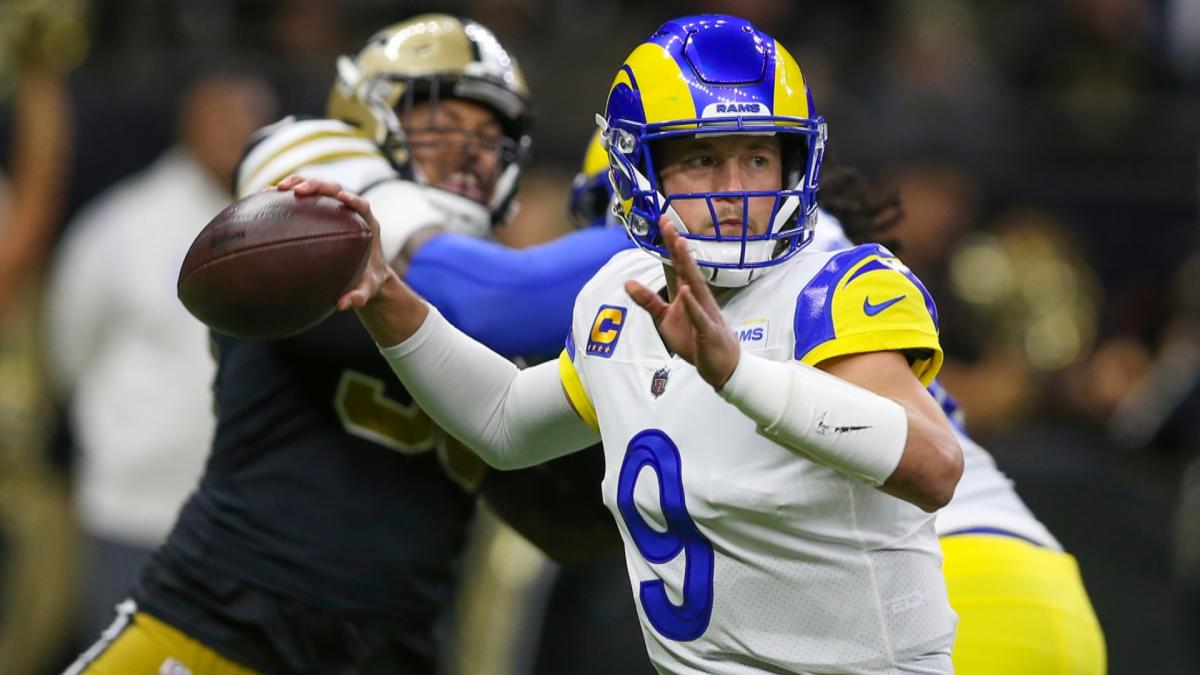
Simpson, who started just 15 games at Alabama, was widely viewed as a Day 2 prospect by analysts, making the Rams‘ decision to take him in the first round the evening’s most significant surprise. Head coach Sean McVay confirmed Simpson will immediately compete with Stetson Bennett for the backup role behind Matthew Stafford, the 38-year-old MVP entering the final year of his contract, with a potential extension looming.
The Rams‘ gamble fits a pattern seen only rarely in recent history: since 2006, nine quarterbacks with fewer than 20 college starts have been selected in the first round, and only Cam Newton — who won MVP in 2015 — avoided disappointment among that group. Simpson’s limited resume raises questions about his readiness, though the Rams organization insists they see long-term potential worth the developmental wait.
While the Rams‘ pick dominated headlines, the draft’s opening half featured other notable deviations from expectation. The Arizona Cardinals selected running back Jeremiyah Love at No. 3, securing him a fully guaranteed four-year, $53 million contract — the largest ever given to a running back in NFL history — despite already possessing three capable backs in Tyler Allgeier, Trey Benson, and James Conner.
The Tennessee Titans continued the trend of unconventional choices by taking wide receiver Carnell Tate at No. 5, a selection described as surprising given the team’s needs and the depth of talent available at the position. Earlier, the New York Jets had used the No. 2 pick to take edge rusher David Bailey from Texas Tech, a move that indirectly benefited their cross-town rivals, the New York Giants, who later selected Arvell Reese at No. 5 — a versatile defender compared to Micah Parsons who will likely play off-ball linebacker due to New York’s stacked edge rush.
Trade activity shaped the board significantly, beginning with the Kansas City Chiefs moving up from No. 9 to No. 6 to acquire cornerback Mansoor Delane, widely regarded as the best at his position in the draft. The Browns, who originally held the No. 6 pick, instead selected offensive tackle Spencer Fano at No. 9 after the trade. The Dallas Cowboys climbed to No. 11 to take safety Caleb Downs, while the Miami Dolphins received offensive tackle Kadyn Proctor from Alabama in the swap.
Later in the round, the Philadelphia Eagles executed a multi-team trade with the Cowboys and Packers to jump to No. 20, where they took wide receiver Makai Lemon — a move interpreted as signaling the impending trade of star receiver A.J. Brown, likely to New England, before the June deadline.
The New York Jets added depth later in the draft, using a prior-year acquisition from the Colts to select tight complete Kenyon Sadiq at No. 16 and, after a trade with the 49ers, wide receiver Omar Cooper Jr. At No. 30, a player noted for his dangerous play after the catch and expected to elevate Geno Smith’s receiving corps.
Other first-round selections included Sonny Styles (linebacker, Ohio State) to the Washington Commanders at No. 7, Jordyn Tyson (wide receiver, Arizona State) to the New Orleans Saints, Francis Mauigoa (offensive tackle/guard, Miami) to the New York Giants via a Bengals trade, Blake Miller (offensive tackle, Clemson) to the Detroit Lions, and Caleb Banks (defensive tackle, Florida) to the Minnesota Vikings.
The draft, held at Acrisure Stadium in Pittsburgh before a crowd of 320,000, lived up to its reputation as football’s premier off-season spectacle, delivering not only the expected flurry of trades but also a series of selections that challenged conventional wisdom about team needs, player value, and draft timing.
Why did the Rams select Ty Simpson despite his limited college experience?
The Rams believe Simpson possesses the upside to eventually succeed Matthew Stafford, viewing him as a developmental project who can learn behind the 38-year-old MVP while competing for the backup role, with the organization citing his potential as worth the risk of his limited resume.
How did the Jeremiyah Love contract set a new precedent in the NFL?
Love’s fully guaranteed four-year, $53 million deal with the Arizona Cardinals represents the largest guaranteed contract ever given to a running back in NFL history, exceeding all prior commitments to the position in total guaranteed value.
Auch interessant


