
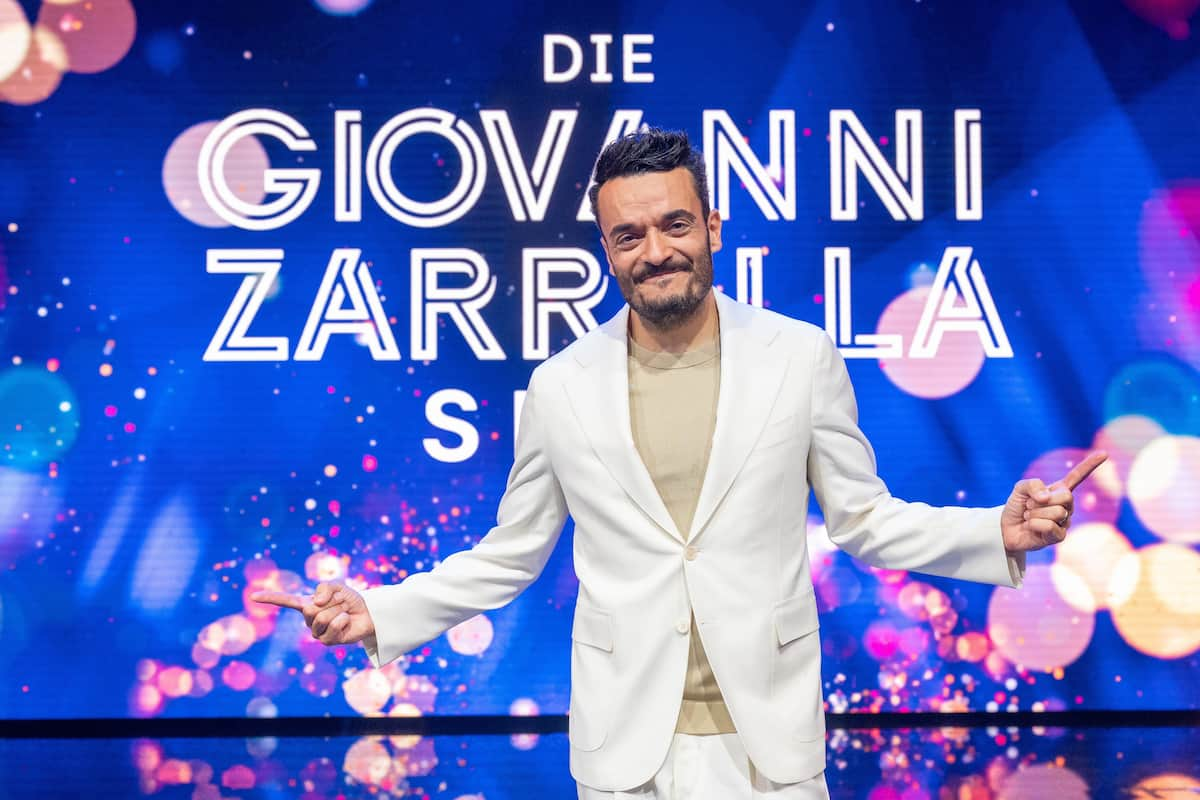
On Saturday evening, German television witnessed a clear ratings battle among three major music shows, with ZDF’s „Die Giovanni Zarrella Show“ emerging as the narrow victor in a tightly contested trio, while ProSieben’s new offering „Staying Alive“ suffered a significant setback.
According to overnight ratings, ZDF’s Schlager-programme attracted 2.88 million viewers, securing a 15.2 percent share of the total audience. This placed it just ahead of RTL’s „Deutschland sucht den Superstar,“ which drew 1.33 million viewers, though the gap narrowed considerably in the key 14- to 49-year-old demographic, where both shows recorded nearly identical figures: ZDF at 0.27 million (9.1 percent) and RTL at a comparable level.
ProSieben’s premiere of „Staying Alive,“ despite featuring acts such as Samu Haber, No Angels, Sasha and Alvaro Soler, managed only 690,000 viewers overall — a disappointing result for a Saturday night flagship. In the younger demographic, the show reached just 190,000 viewers, equating to a 6.2 percent market share, underscoring its struggle to gain traction among advertisers‘ core target group.
Meanwhile, the evening’s overall winner was not a music show but ARD’s crime series „Lost in Fuseta,“ which opened with 4.13 million viewers (20.6 percent share) and retained 3.59 million in its second episode (19.5 percent). Among younger viewers, yet, the series performed modestly, with the first episode capturing only 7 percent (0.2 million) and the second 4.8 percent (0.15 million).
Other channels found niche success with films: RTLII’s „Die Wolke“ reached 570,000 viewers overall but achieved a strong 7.4 percent in the 14-49 bracket; Sat.1’s „Asterix & Obelix im Reich der Mitte“ drew 900,000 viewers and 8.0 percent in the target group; and RTL Super’s „Asterix & Obelix: Mission Kleopatra“ secured 4.6 percent with 340,000 viewers. VOX’s James Bond film „Der Spion, der mich liebte“ reached 770,000 viewers but managed only 4.7 percent among younger audiences.
For Giovanni Zarrella, the result represented a relief — avoiding the embarrassment of falling below his show’s previous low of 2.73 million viewers from September 2024 — though the modest performance highlighted ongoing challenges in competing with established ARD formats like those hosted by Florian Silbereisen, which continue to command significantly higher viewership.
At RTL, the continued decline of „Deutschland sucht den Superstar“ to its lowest seasonal rating raises questions about the long-term viability of the format, particularly as it fails to resonate with younger audiences, managing only a single-digit share among teens and young adults.
ProSieben now faces mounting pressure to reassess „Staying Alive“ after its underwhelming debut, especially given the high expectations tied to its star-studded lineup and prime-time slot. The show’s inability to convert celebrity appeal into sustained viewership suggests a deeper disconnect with current audience preferences.
Why did ZDF’s music show outperform its rivals despite similar overall concepts?
ZDF benefited from stronger brand loyalty and a more established audience for Schlager music, particularly among older viewers, allowing it to hold ground in a fragmented market where RTL and ProSieben struggled to convert star power into sustained engagement.

What does this signify for the future of music competition shows on German television?
The results suggest growing audience fatigue with traditional talent and performance formats, especially among younger viewers, potentially prompting broadcasters to reconsider investment in costly prime-time music spectacles unless they can innovate beyond familiar templates.
Auch interessant


