
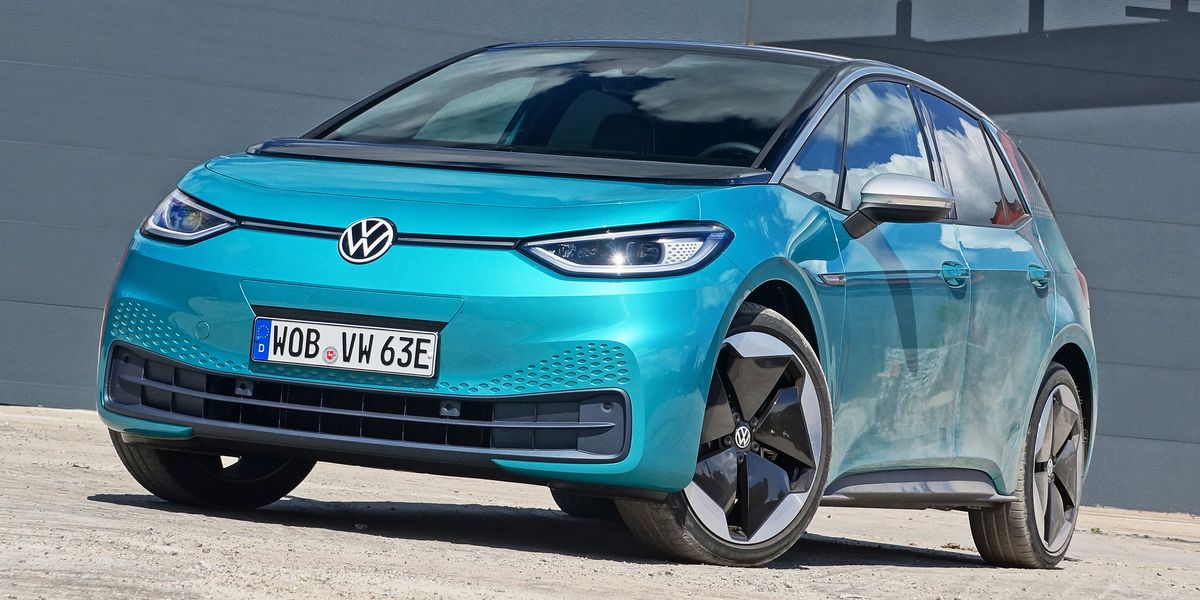
At the start of the year, 116,053 VW ID.3 models were registered in Germany, compared to 106,184 Tesla Model Ys. A year earlier, the Model Y had held the top position. The figures, published by the KBA and reported by n-tv.de, represent the net result of vehicle registrations, deregistrations, and exports. The data indicates a growing presence for Volkswagen’s compact electric hatchback in a segment where Tesla’s crossover had previously led.
The numbers behind the shift
The KBA’s figures highlight more than just a change in ranking. Both the ID.3 and Model Y recently surpassed 100,000 registered vehicles in Germany, marking a milestone for battery-electric models in the country. A third contender, the VW ID.4/ID.5 duo, is also approaching this threshold, with 97,120 registrations at the start of the year and an additional 5,000 added in the first quarter. Even after accounting for vehicles leaving the fleet due to accidents, exports, or scrappage, the ID.4/ID.5 family appears poised to join the six-figure group soon.
Volkswagen’s broader lineup includes multiple electric models with strong registration volumes, while Tesla’s presence in Germany remains focused on two vehicles: the Model Y and the Model 3. The Model 3, which had previously been a strong performer, has seen its position shift as newer competitors have entered the market. With fewer models to distribute its volume, Tesla’s position in the market has become more vulnerable to focused efforts from rivals.
Volkswagen’s approach benefits from an extensive network of dealerships, which provides broader access for customers across Germany. This distribution model contrasts with Tesla’s direct-sales approach, which, while efficient, does not offer the same level of local availability. Industry observers note that the ID.3’s presence is more evenly spread across Germany’s regions, including rural and urban areas, whereas Tesla’s registrations remain concentrated in metropolitan centers.
What the lead change does—and does not—signify
The ID.3’s rise does not indicate a decline in Tesla’s overall influence in Germany. The Model Y remains the second most registered electric vehicle, and Tesla continues to hold a strong position in the market. The shift also does not reflect a drop in electric vehicle demand. Germany’s total EV fleet reached 2.03 million at the start of the year, up from 1.8 million the previous year, even as overall car registrations have continued to decline.
The data suggests a market undergoing change. Tesla’s earlier dominance relied on a single model, but that dynamic has evolved as competitors have introduced compelling alternatives. Volkswagen, once seen as cautious in its electrification efforts, has established itself as a viable option through consistency rather than radical innovation. The ID.3 is a mass-market electric car that leverages Volkswagen’s existing supply chains, dealer network, and familiarity with German regulatory and consumer preferences.
The broader context reveals additional trends. Germany’s most registered car overall remains the VW Golf, with 3.2 million units on the road, including electric variants. However, the Golf’s dominance is waning, as its numbers, along with those of other traditional compact cars like the Opel Corsa and VW Polo, have declined in recent years. Meanwhile, the shift toward SUVs and crossovers is evident in Germany, mirroring global trends. The VW Tiguan, the country’s most popular SUV, now ranks ninth in overall registrations, with 811,016 vehicles, a figure that has grown even as compact cars have lost ground.
Tesla’s challenge: brand vs. volume
Tesla’s strength has long been tied to its brand. The Model Y’s success in Germany was driven not only by its specifications but also by its appeal as a symbol of modern mobility—sleek, software-driven, and free from the legacy of combustion engines. That appeal remains strong, but it is no longer sufficient to maintain market leadership in a segment that is becoming more competitive and mature.
Volkswagen’s strategy with the ID.3 is different. Rather than positioning itself as a disruptor, Volkswagen has focused on practicality. The ID.3 is designed for everyday use, offering a range that meets most drivers’ needs, a price point aligned with government incentives, and a charging network familiar to German consumers. In a market where electric vehicles are no longer a novelty, these factors have become increasingly important.
The question now is how Tesla will respond. The company’s next steps in Germany may involve expanding its physical presence through additional service centers and showrooms, as well as refining its software offerings to compete with Volkswagen’s advancements in infotainment and driver-assistance systems. While the Model Y’s lead has narrowed, Tesla retains advantages in areas where legacy automakers have struggled, such as over-the-air updates, autonomous driving features, and energy integration.
What to watch in the coming months
The KBA’s next quarterly report will provide early insights into whether the ID.3’s lead is likely to persist. Initial data from the first three months of the year showed more new Model Y registrations than ID.3s, but not enough to overcome the cumulative gap. The competition now hinges on how many older Model Ys leave the fleet through exports or deregistrations, and how many new ID.3s are added.
A second development to monitor is the progress of the ID.4/ID.5. If Volkswagen’s SUV models reach 100,000 registrations in the near future, the company could hold two of Germany’s top three electric vehicle spots. This would further solidify its position and mark a shift in the market’s balance.
Finally, the broader European market will be paying attention. Germany is the continent’s largest automotive economy, and trends here often influence developments elsewhere. If the ID.3’s success is replicated in countries like France, the Netherlands, or Scandinavia, Volkswagen’s strategy of steady, incremental progress could reshape the competitive landscape. Tesla, meanwhile, has never been content to focus solely on long-term stability. The company’s next product cycle, which may include a more affordable model, could yet alter the market’s direction.
For now, the data is clear. The ID.3’s rise reflects a meaningful shift: in Germany’s electric vehicle market, Tesla’s earlier dominance is being challenged by a growing and competitive field.
Verwandte Artikel


