
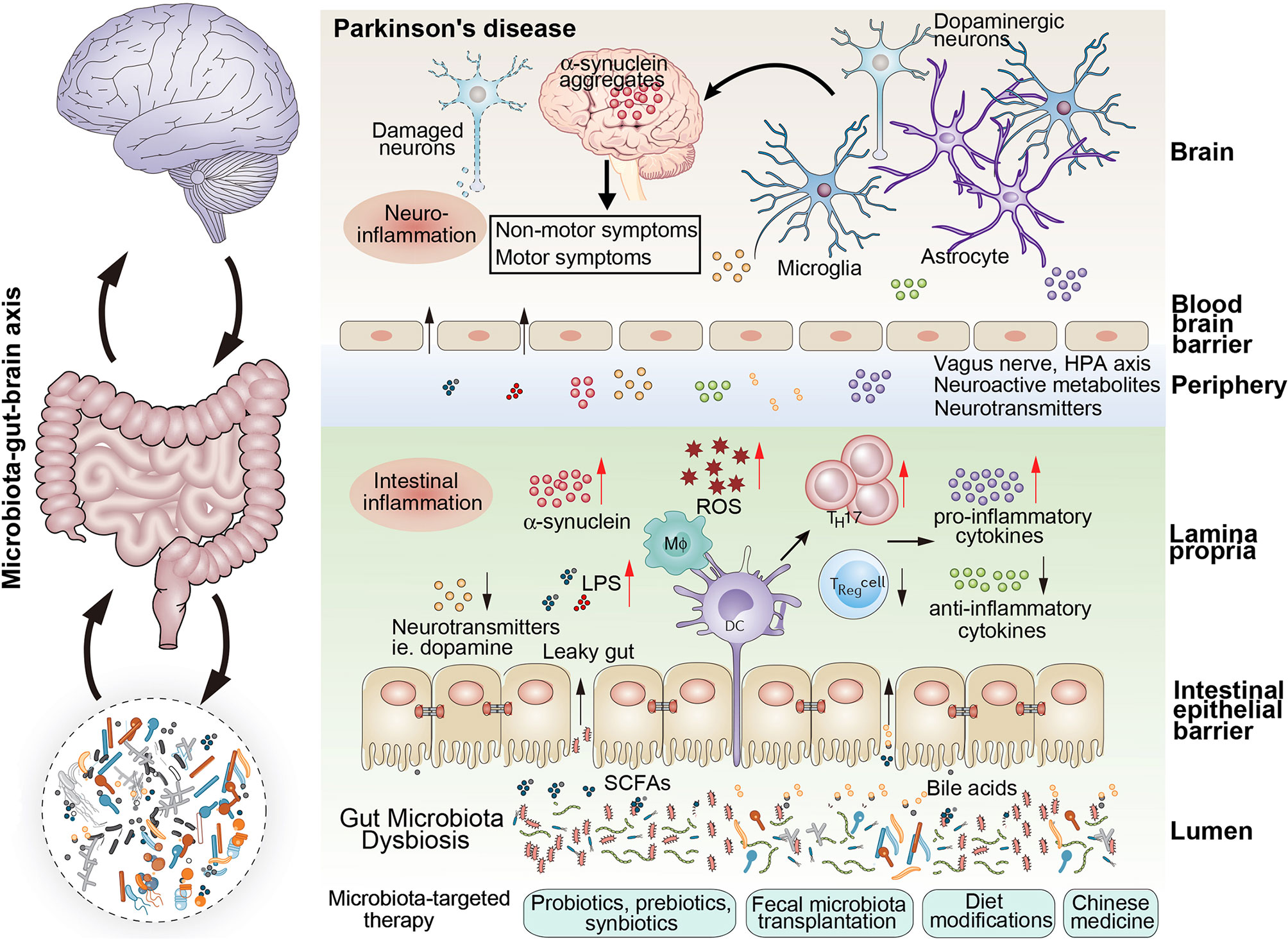
Scientists have found that changes in gut bacteria can signal Parkinson’s risk years before symptoms appear, offering a potential window for early intervention.
An international study published in Nature Medicine analyzed stool and clinical data from 464 individuals, including 271 Parkinson’s patients, 150 healthy controls, and 43 asymptomatic carriers of the GBA1 gene variant, which increases Parkinson’s risk up to 30-fold. Researchers identified 176 bacterial species whose abundance differed significantly in Parkinson’s patients compared to healthy individuals. Notably, bacteria that produce anti-inflammatory fatty acids like butyrate — such as Roseburia and Faecalibacterium — were markedly reduced in patients, whereas strains like Streptococcus mutans and certain Bifidobacteria were more prevalent.
Among the GBA1 carriers who had not yet developed symptoms, 142 of the altered bacterial species showed changes in the same direction as seen in Parkinson’s patients, though less pronounced. This suggests the gut microbiome in this high-risk group exists in an intermediate state between health and disease. Study lead Anthony Schapira of University College London stated Here’s the first time such bacterial signatures have been linked to genetic risk before symptom onset.
For more on this story, see Gut bacteria chemicals signal early dementia years before symptoms.
Interestingly, about 20% of the healthy control group also exhibited a microbiome pattern resembling that of genetically at-risk individuals, indicating that microbial shifts may precede clinical diagnosis even in those without known genetic predispositions.
Parallel research from the University of East Anglia, published in Gut Microbes, reinforces the gut-brain axis’s role in neurodegeneration. By analyzing blood and stool samples from 150 adults over 50, researchers found that subtle changes in blood metabolites — produced by gut bacteria — could signal early cognitive decline years before symptoms emerge. Study lead David Vauzour emphasized that dementia remains one of the greatest public health challenges, with over 55 million people affected globally, and that early detection through biological warning signs could enable timely lifestyle interventions.
This follows our earlier report, Blood test predicts dementia years early via gut metabolites.
Together, these studies suggest that the gut may serve as an early warning system for neurodegenerative diseases. While no diagnostic test based on these findings is currently available, the consistent link between microbial composition and future disease risk opens avenues for preventive strategies targeting gut health.
Can gut bacteria changes predict Parkinson’s before symptoms start?
Yes, research shows specific bacterial patterns in the gut can indicate increased Parkinson’s risk years before motor symptoms appear, particularly in individuals with genetic risk factors like the GBA1 variant.

Is there a test available now to detect this risk?
No, while the findings are promising, no clinical test based on gut microbiome analysis for Parkinson’s or dementia risk is currently available for routine employ.
Auch interessant


