
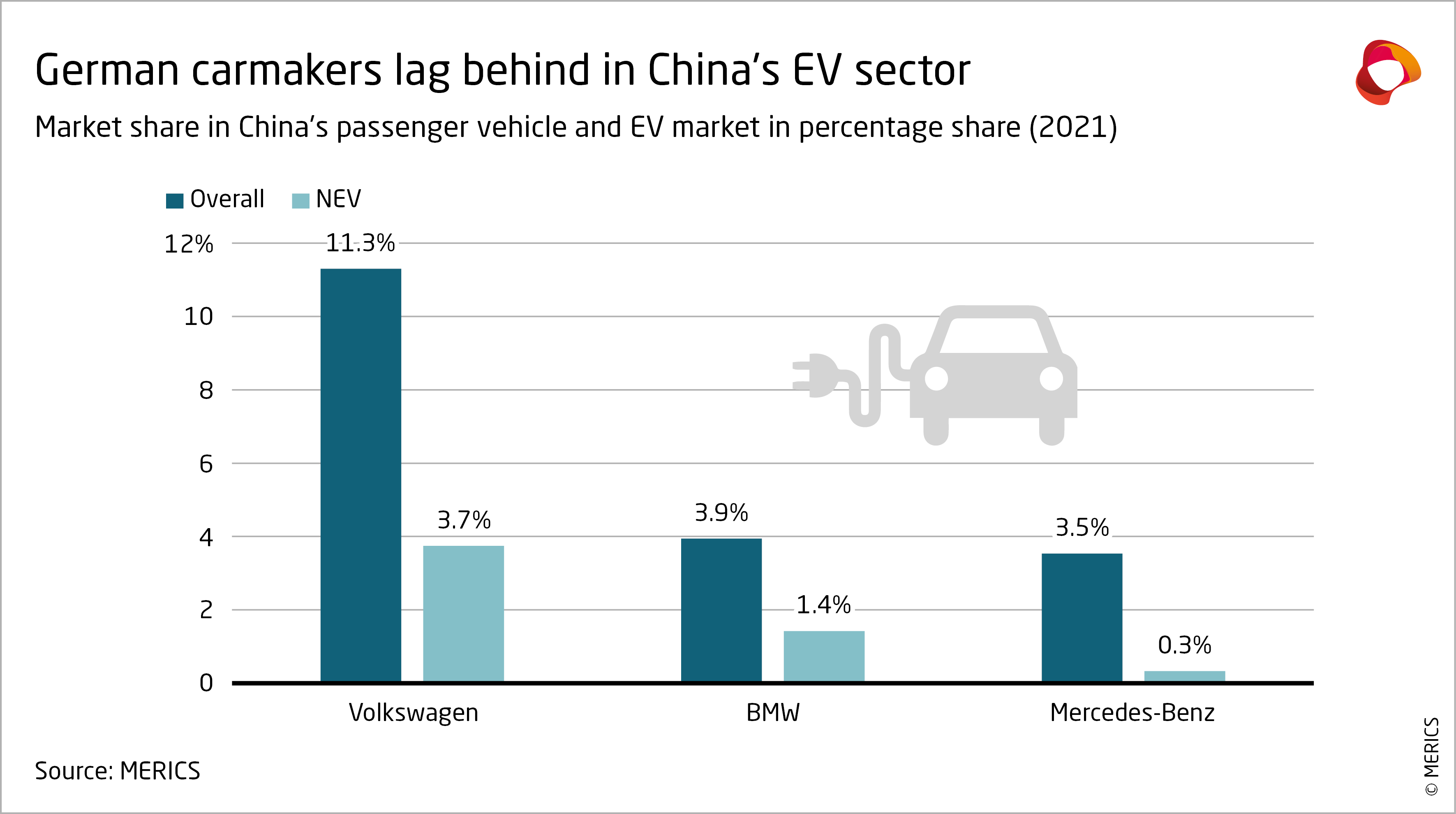
The combined market share of German electric vehicle makers in China has fallen to a record low of just 1.6 percent in the first quarter of 2026, according to Marklines data cited by Handelsblatt.
This sharp decline comes as Chinese automakers prepare to unveil 181 latest production models and 71 concept vehicles at the Beijing Auto Show, signaling a decisive shift in the world’s largest EV market. Among them, Zeekr’s 8X SUV — priced from $53,000 — is being positioned as a direct challenger to premium German rivals like the Porsche Cayenne and BMW X5M, which start at $135,000 and $205,000 respectively.
Chinese manufacturers are no longer competing solely on price but on value, offering comparable features at a fraction of the cost. As Bo Yu of Jato Dynamics observed, “The price war has evolved into a contest over what you actually secure for your money.”
The shift marks a stark reversal from decades past, when German brands dominated Chinese roads through perceived engineering superiority and aspirational branding. Volkswagen’s debut in Shanghai in 1985 once drew crowds marveling at the quality of German brochures — a detail recalled in former CEO Carl Hahn’s memoirs — but today, that image has eroded.
In the electric era, traditional German strengths in mechanical engineering carry less weight. Software integration, battery efficiency, and rapid innovation cycles now determine competitiveness — areas where Chinese firms have accelerated rapidly, aided by domestic support and a focus on technological self-reliance.
Frank Schwope of the Fachhochschule des Mittelstands in Köln warned that the Western premium automotive business model is being dismantled in real time, noting that China’s ability to build premium brands quickly — combining high tech with nationalist appeal — has raised the bar for legacy players.
Geely CEO Gan Jiayue declared the Zeekr 8X “the new king of the road” during a presentation in Ningbo, underscoring the confidence among Chinese firms that they can now lead not just in volume, but in perceived prestige and performance.
The implications extend beyond market share: German automakers face pressure to reevaluate their China strategies, which have long relied on joint ventures and localized production of combustion-engine vehicles now losing relevance in an EV-driven transition.
Why did German EV market share in China collapse so rapidly?
German manufacturers lost ground due to slower adaptation to software-defined vehicles, higher pricing, and the rapid rise of Chinese competitors offering advanced features at lower costs, particularly in battery technology and user interface design.

Can German automakers recover their position in China’s EV market?
Recovery would require significant investment in software platforms, battery sourcing, and localized innovation — steps some firms are taking, but success is not guaranteed given the pace of change and shifting consumer preferences toward domestic brands.
Weiterlesen


