
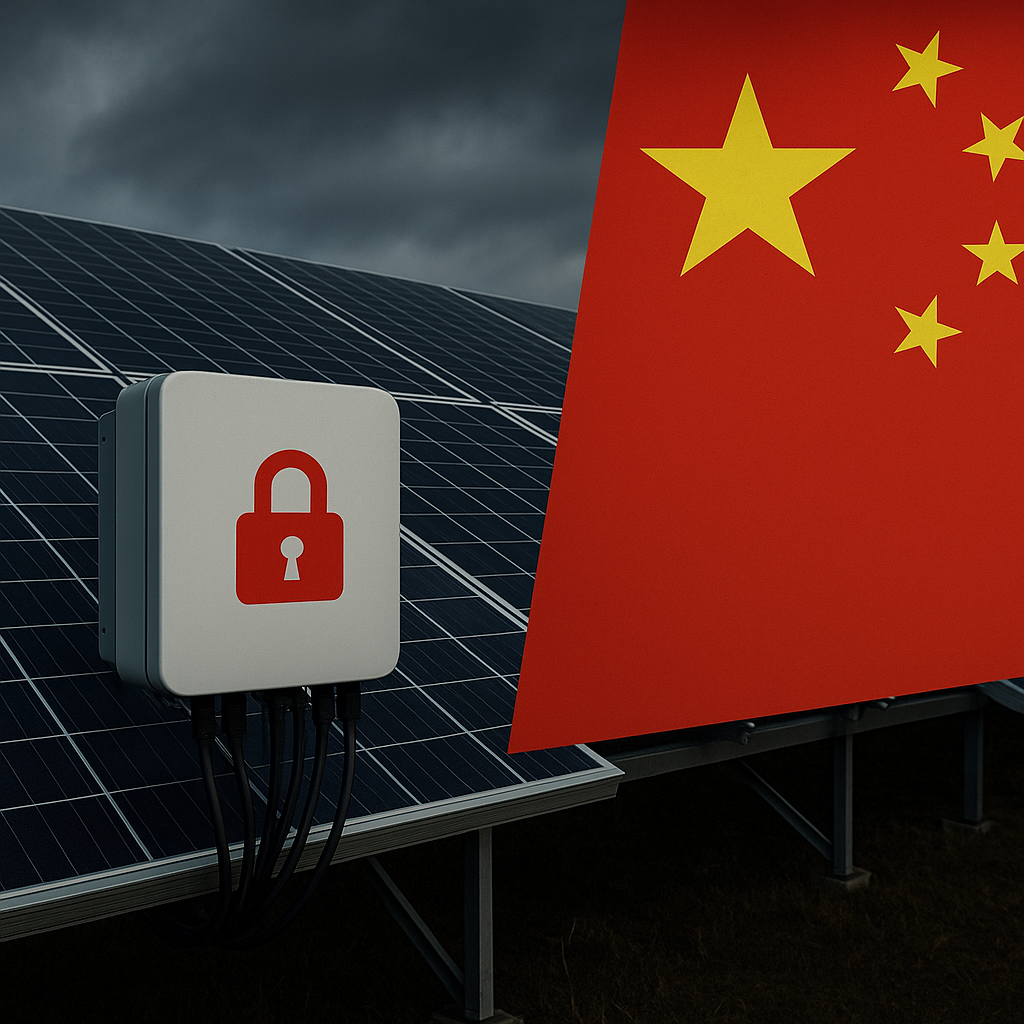
The European Commission has halted EU funding for all energy projects containing inverters from China, Russia, Iran, or North Korea, according to a report by Der Spiegel confirmed by industry sources.
The ban applies to new projects effective immediately and was communicated in a Thursday morning video conference with affected EU directorates and industry associations, sources said.
In the EU, virtually all solar inverters are sourced from China, primarily from Huawei and Sungrow, making the restriction particularly consequential for the bloc’s renewable energy rollout.
Inverters, which manage when and how much electricity from solar panels or battery storage flows into the public grid, are typically internet-connected, a feature the Commission cites as a potential cybersecurity vulnerability.
The measure was deemed sensitive and not intended for public announcement, according to participants in the briefing.
The restriction extends to projects in EU neighboring regions such as North Africa and the Balkans if they are connected to the European power grid.
It also covers projects using inverters from companies based outside the four countries if those firms are owned or controlled by entities from China, Russia, Iran, or North Korea.
Financial institutions must report their active project pipelines by early May and are urged to replace inverters where possible; only projects already well advanced may qualify for transitional arrangements allowing continued utilize of Chinese equipment.
According to attendees, the European Investment Bank funded approximately one-fifth of all solar projects in the EU in 2025, most of which used Chinese inverters, as reported by industry insiders.
How the inverter ban affects project timelines and costs
Industry analysts note that replacing inverters mid-project could add weeks to timelines and increase expenses, particularly for smaller developers lacking alternative suppliers.
Larger firms may absorb the shift more easily, but supply chain constraints for non-Chinese inverters could create bottlenecks across the sector.
What the transitional rule means for ongoing projects
Only projects that have already reached an advanced stage of construction or procurement are likely to qualify for exemptions under the transitional rule, sources indicated.
The exact threshold for “particularly far advanced” remains undefined, creating uncertainty for developers in mid-stage planning.
Why did the EU target inverters specifically?
Due to the fact that inverters manage grid connection and are often internet-connected, the Commission views them as a potential point of cyber intrusion or remote manipulation.

Are there exceptions for projects outside the EU?
Yes, the rule applies to projects in neighboring regions like North Africa or the Balkans only if they are connected to the European electricity grid; standalone off-grid systems are not affected.
Weiterlesen


