
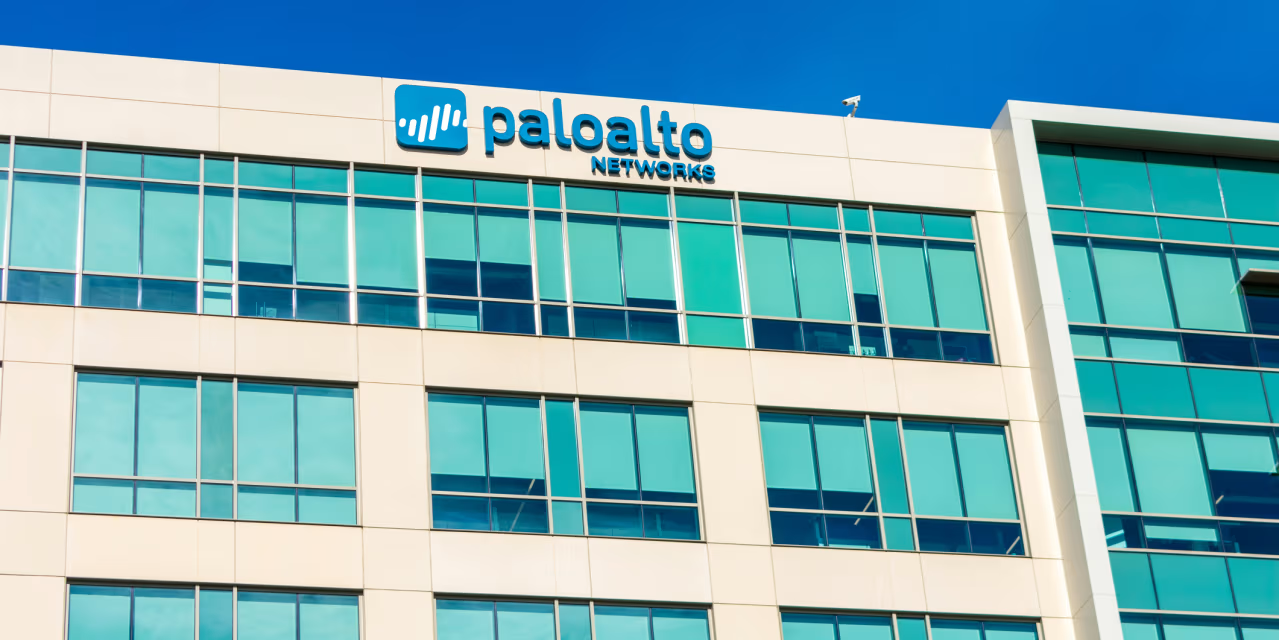
Palo Alto Networks übertraf im vierten Quartal 2026 die Erwartungen der Wall Street mit einem Umsatz von 3,41 Milliarden US-Dollar, während steigende KI-Sicherheitsrisiken die Nachfrage nach Cyber-Abwehrkräften ankurbeln. Trotz starker operativer Zahlen gab die Aktie im nachbörslichen Handel leicht nach, da hohe Erwartungen bereits eingepreist waren.
Umsatzsprung und Quartalsergebnisse im Geschäftsjahr 2026
Palo Alto Networks hat die Schätzungen für das vierte Quartal übertroffen, da wachsende Bedrohungen durch künstliche Intelligenz die Nachfrage nach IT-Sicherheitslösungen massiv anheizen. Wie aus den vorgelegten Geschäftszahlen hervorgeht, stieg der Umsatz im Quartal im Jahresvergleich um 34 Prozent von 2,54 Milliarden US-Dollar a year ago auf 3,41 Milliarden US-Dollar. Von LSEG befragte Analysten hatten im Schnitt mit 3,35 Milliarden US-Dollar gerechnet. Shares dipped about 2% in extended trading, following a 5% drop during the regular session. Shares of Palo Alto Networks PANW initially rose 5% in extended trading, after it reported an earnings beat for the fiscal fourth quarter. However, the stock gave up those gains shortly after the print to end the after-hours session down 1.9%.
Beim bereinigten Gewinn je Aktie meldete das Unternehmen einen Wert von 1,02 US-Dollar, während der Konsens bei 98 cents expected gelegen hatte. Unter dem Strich verzeichnete Palo Alto Networks jedoch einen Nettoverlust von 282 Millionen US-Dollar oder 35 Cent je Aktie, down from net income of $254 million, or 36 cents per share, a year ago. Palo Alto reported a net loss of $282 million, or 35 cents per share.
Künstliche Intelligenz als langfristiger Wachstumstreiber
Firmenchef Nikesh Arora erklärte gegenüber CNBC, dass die Beschleunigung von KI-Angriffen customers to build better and faster cyber defenses zwinge, um ihre Infrastruktur zu schützen. Those concerns have already moved the needle, but the long-term growth runway is still in the early stages. Autonome Attacken wie der bekannte Vorfall zwischen OpenAI und Hugging Face verdeutlichen nach Ansicht von Marktbeobachtern, dass AI agents can increasingly plan and orchestrate attacks autonomously. Arora joined CNBC’s Jim Cramer on „Mad Money“ following the earnings call and said the AI threat is forcing companies to upgrade aging cyber infrastructure.


Nikesh Arora, CEO von Palo Alto Networks, erklärte, dass dies ein langfristiger Rückenwind sei, der sich weder in einem noch in zwei Quartalen vollziehe, sondern lediglich die langfristige Dauer aus Sicht der Wachstumsrate für das Geschäft des Unternehmens untermauere.
Arora wies darauf hin, dass das Unternehmen nach dem Erscheinen leistungsfähiger Modelle wie Anthropic’s Mythos over 2,000 customer briefings, up from the roughly 1,200 it disclosed last quarter durchgeführt hat. Parallel treibt das Management seine Expansionsstrategie durch Zukäufe voran. Neben der Übernahme von CyberArk for $25 billion für Identity-Security sowie Chronosphere for nearly $3.4 billion gab das Unternehmen den Kauf des AI startup Console bekannt, as it deepens its AI security offerings. In just over a year, Arora has accelerated an aggressive dealmaking push.
Ausblick und verhaltene Reaktionen an den Börsen
But Palo Alto isn’t the only beneficiary of the AI security race. Last week, both CrowdStrike and Okta surged on upbeat earnings and guidance as customers spend on more cyber tools. CrowdStrike has reported for the same period ending July 31. Shares have climbed 89.18% year to date, while the stock has nearly doubled this year as the rise of highly capable AI models like Anthropic’s Mythos spurs demand for newer security tools to detect and respond to agentic cyberattacks.

Dennoch reagierte der Aktienmarkt zunächst zurückhaltend, da high expectations are already priced in und Shares now trade at $359.66 against a forward P/E of 93. Das Unternehmen treibt zudem die Integration großer Zukäufe voran, while Q3 delivered revenue of $3.002 billion, up 31.15% year over year, and non-GAAP EPS of $0.85, beating by 6.65% and extending the streak to five quarters. NGS ARR reached $8.13 billion, up 60%, while trailing 12-month adjusted free cash flow margin ran at 38.5%, a 430 basis point improvement. CEO Nikesh Arora called Q3 a record quarter,
citing accelerating organic bookings as customers race to secure AI deployments. Consensus estimates for Q4 FY26 estimated revenue at $3.35B with a YoY change of +32%, and non-GAAP EPS at $0.9777 with a YoY change of +10%, alongside FY26 estimates of $11.42B and $3.7754 and FY27 estimates of $13.84B and $1.94. Revisions skew sharply positive, with 40 upward Q4 EPS revisions in the trailing 30 days against one downward, though FY27 EPS has been reset from $2.33 ninety days ago to $1.94 as acquisition dilution flows through models.
Weiterlesen


