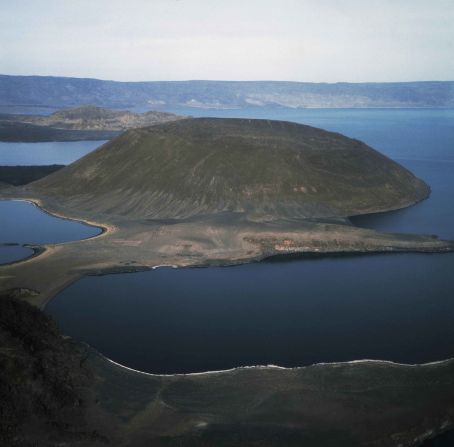
The crust beneath Africa’s Turkana Rift is only 13 kilometers thick in its center, far thinner than previously measured, indicating the continent’s breakup is further advanced than scientists realized.
How the thinning crust accelerates continental rifting
The reduced crustal thickness weakens the lithosphere, making it easier for tectonic forces to pull the African and Somali plates apart at their current rate of 4.7 millimeters per year. This process, known as necking, mirrors how taffy stretches thin before snapping, and signals the rift has reached a critical phase where complete separation becomes more likely over geological time.
Why the Turkana Rift preserves early human fossils
The intense volcanic activity and crustal thinning in the Turkana region created ideal conditions for sediment accumulation and fossil preservation, explaining why so many early human remains have been found there. These same geological forces that now indicate advanced rifting also shaped the landscape that protected ancient bones for millions of years.

How long will it take for Africa to split apart?
The source does not specify a timeline, noting that these changes unfold over immense timescales, likely millions of years.
What evidence supports the finding of thinner crust?
Researchers analyzed high-quality seismic data combined with other imaging methods to map underground structures and measure crust depth, finding it exceeds 35 kilometers away from the rift center but drops to about 13 kilometers at its midpoint.