
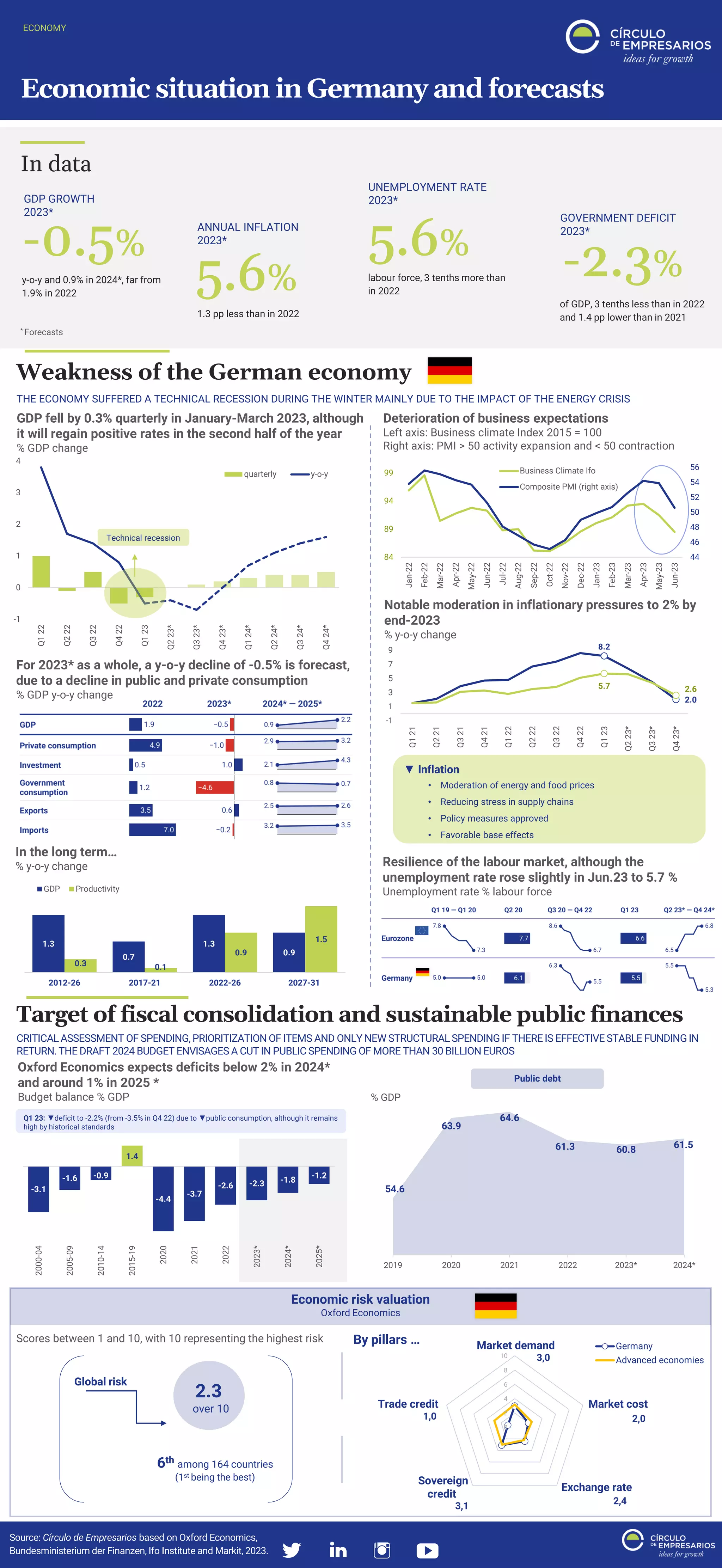
German economic growth has been cut in half, with the government now forecasting just 0.5 percent expansion for 2026, down from the 1.0 percent projected only three months ago.
The sharp revision, announced by Economics Minister Katherina Reiche on Wednesday, directly links the downturn to the ongoing war in Iran and its ripple effects on global energy markets. According to both tagesschau.de and t-online.de, the conflict has disrupted shipping through the Strait of Hormuz, tightening supplies and driving up prices for oil, gas, and industrial raw materials.
These rising costs are squeezing households and increasing operational pressures on German manufacturers, dampening the expected post-winter recovery. “The economic recovery anticipated for this year is once again being stalled by external geopolitical shocks,” Reiche stated, echoing nearly identical wording across both reports.
While growth forecasts were slashed, inflation expectations were revised upward. Consumer prices are now projected to rise by 2.7 percent in 2026, climbing to 2.8 percent the following year — a combination of stagnant output and persistent price pressures that complicates policy responses.
Despite the grim outlook, Reiche pointed to structural reforms as the only viable path forward, insisting there is no alternative to long-term economic adjustments. She also expressed hope for spontaneous stimulus from the private sector, though offered no concrete mechanism for how such impulses might emerge amid deteriorating conditions.
The timing of the announcement underscores the volatility of current forecasts. Issued as part of the government’s spring economic projection, the revision came just weeks after the same officials had expressed confidence in a stronger rebound — a shift that highlights how rapidly external events can overturn domestic planning.
Analysts warn that prolonged uncertainty in the Middle East could keep growth subdued well beyond 2026, particularly if energy prices remain elevated or supply chains face repeated shocks. The German economy, already navigating structural challenges in manufacturing and energy transition, now faces an external pressure test with limited domestic buffers.
For consumers, the dual threat of weak income growth and rising living costs may constrain spending — the very engine the government hopes will ignite a recovery. Businesses, meanwhile, face higher input costs without clear signs of corresponding demand strength, raising questions about investment and hiring plans.
The situation places the federal government in a difficult position: tasked with stimulating growth while avoiding fiscal excess, all under the shadow of a conflict it cannot control. Reiche’s emphasis on structural reform may reflect an acknowledgment that short-term stimulus alone cannot counteract sustained external headwinds.
Why did the German government cut its growth forecast so sharply?
The government cited the war in Iran as the primary cause, specifically noting how the conflict has disrupted energy supplies through the Strait of Hormuz, leading to higher prices for oil, gas, and raw materials that burden both households and industry.

What does this mean for inflation and household finances in Germany?
Inflation is now expected to reach 2.7 percent in 2026 and rise to 2.8 percent in 2027, meaning households will likely face higher prices for essentials even as economic growth stagnates, potentially squeezing disposable income and slowing consumer spending.
Weiterlesen


