
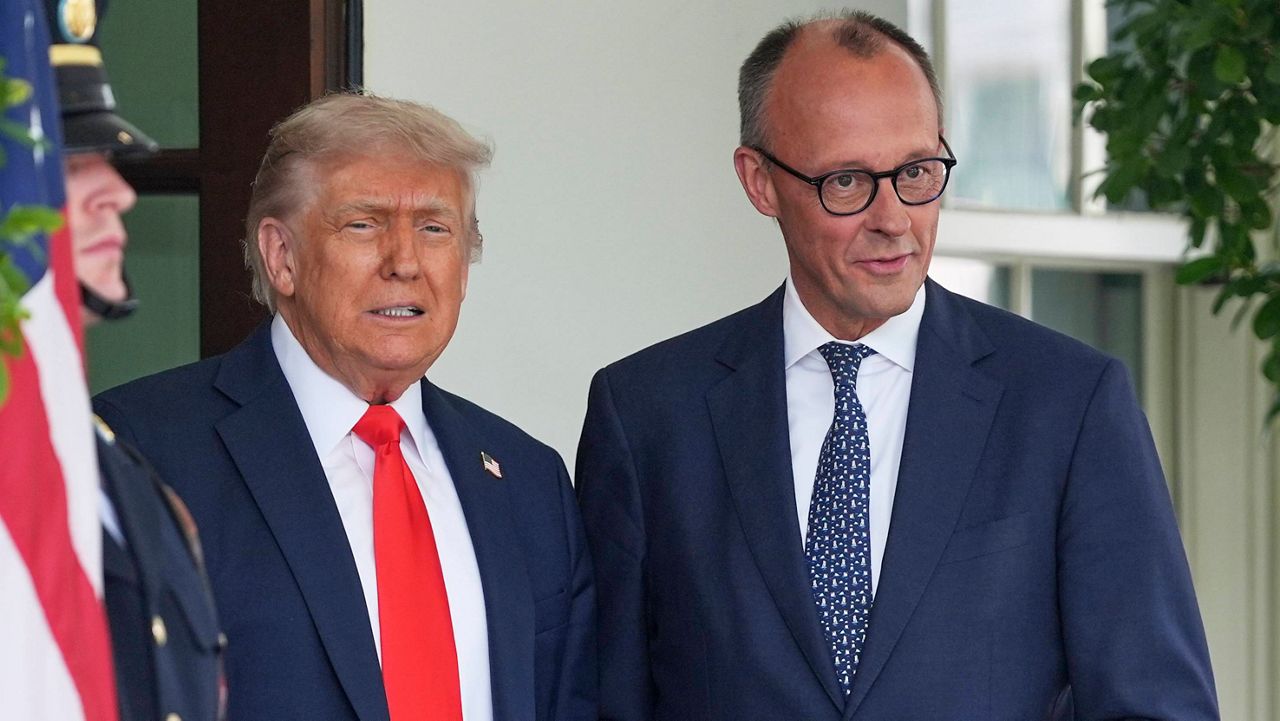
The Rhetorical Frontline: What Was Said—and Why It Stings
The exchange began with a warning from Friedrich Merz, who, after returning from Washington, criticized the U.S. approach to the Iran conflict as lacking a clear strategy. He referenced past military interventions, such as those in Afghanistan and Iraq, suggesting that such engagements often lead to unintended and lasting consequences. His remarks reflected a broader skepticism about the feasibility of achieving stable outcomes through military means.
Donald Trump’s response came swiftly, delivered not through traditional diplomatic channels but via social media. He accused German leadership of being misinformed about the stakes of the conflict, asserting that Iran’s nuclear ambitions posed a severe threat to global security. Trump’s statements framed the situation as requiring immediate and forceful action, contrasting sharply with Germany’s more measured stance. His comments also included broader critiques of Germany’s economic performance, suggesting that its caution in foreign policy was symptomatic of deeper challenges.

What makes this exchange significant is its timing. The conflict in Iran has already had far-reaching effects, including disruptions to trade and energy markets. Germany, in particular, faces economic pressures as it continues to recover from previous crises. The public disagreement between Merz and Trump is not merely about Iran; it reflects a larger debate over Europe’s role in a global landscape where U.S. leadership is increasingly questioned. The tensions highlight the difficulty of aligning strategic priorities when economic and security interests diverge.
Strategic Caution vs. Assertive Action: The Transatlantic Divide
The core of the dispute lies in differing perspectives on how to address the Iran conflict. For U.S. officials, the situation is seen as a critical test of resolve against a regime perceived as a persistent threat to regional stability. Statements from the Trump administration have emphasized the dangers of allowing Iran to advance its nuclear capabilities, framing the conflict as a necessary effort to prevent broader instability. The language used suggests that hesitation could embolden further aggression, reinforcing the need for a firm and proactive stance.
Germany’s position, as articulated by Merz, reflects a more cautious approach. His references to past conflicts serve as a reminder of the complexities and unintended consequences of military intervention. European leaders have expressed concern that escalating the conflict without a clear exit strategy could lead to prolonged instability, with significant political and economic costs. Merz’s remarks underscore a broader European unease about the potential for the U.S. to pursue a course of action that may not align with European interests or capabilities.
These differences are not new. The U.S. and Europe have long held divergent views on how to handle Iran, from the 2015 nuclear deal to the current conflict. What has changed is the urgency of the situation. The ongoing crisis has already disrupted global trade, particularly in the Gulf, where attacks on shipping have forced companies to adjust their supply chains at increased cost. Germany, as Europe’s largest economy, is particularly exposed to these disruptions. While specific figures remain unclear, officials have acknowledged that the conflict is diverting resources and attention away from domestic recovery efforts. The economic strain is compounded by Germany’s reliance on U.S. security commitments, which limits its ability to independently shape the conflict’s outcome.
The tension is further complicated by the personal dynamics between Merz and Trump. Despite their differences, the two leaders have maintained a working relationship, with Merz positioning himself as one of the few European figures capable of engaging with the U.S. president. However, this public disagreement suggests that personal rapport may not be sufficient to bridge the strategic divide. The episode serves as a reminder of the challenges facing transatlantic relations when core interests do not align.
The Economic Fallout: Germany’s Recovery at Risk
The Iran conflict has emerged at a critical juncture for Germany. After a period of economic stagnation, the country had begun to show signs of recovery in early 2026, driven by improvements in manufacturing and a gradual stabilization of energy prices. However, the conflict has introduced new uncertainties. Disruptions to shipping lanes in the Gulf have affected the flow of goods, particularly for industries reliant on raw materials from the Middle East. German automakers, already facing weak demand, have reported delays in sourcing critical components, while chemical producers have seen rising costs due to the need to reroute supply chains.

Officials have been cautious about quantifying the economic impact, but the concerns are evident. Merz has acknowledged that the conflict is imposing significant costs on Germany’s economy, though he has not provided specific figures. The lack of detailed data suggests that the full extent of the damage may not yet be clear, as the situation continues to evolve. What is apparent, however, is that Germany’s recovery is increasingly vulnerable to a conflict it did not initiate and cannot easily influence.
The economic strain extends beyond domestic concerns, carrying broader geopolitical implications. Germany’s capacity to exert influence—whether through trade, diplomacy, or military support—is closely tied to its economic stability. If the conflict persists, Berlin may face difficult choices between aligning more closely with U.S. demands or pursuing a more independent path focused on de-escalation. The latter option carries its own risks, including the potential for further straining relations with Washington at a time when Europe’s security framework is already under pressure.
What to Watch: The Next Moves in a High-Stakes Game
The recent exchange between Trump and Merz is unlikely to be the final word on the Iran conflict. The coming weeks will reveal whether the U.S. and Europe can find common ground or if the current rift will deepen.
First, the upcoming EU-U.S. security talks, scheduled for late May, will provide an opportunity to address the Iran conflict. Originally focused on NATO’s eastern flank, the discussions are now expected to prioritize the crisis in Iran. European officials have indicated a willingness to engage, but only if the U.S. is prepared to address concerns about the long-term strategy for the conflict. Whether the Trump administration will be open to such a dialogue remains uncertain.
Second, economic indicators will offer insights into the conflict’s impact. Germany’s next GDP report, due in June, will provide an early assessment of how the crisis is affecting growth. Analysts will be closely watching for signs of contraction in key sectors, particularly manufacturing and trade. If the data disappoints, pressure on Merz to adopt a more assertive stance—either toward the U.S. or Iran—could intensify.
Third, the rhetoric from both sides will be telling. Trump and Merz have demonstrated a willingness to escalate their public statements when it aligns with their political interests. For Trump, framing the Iran conflict as a test of resolve resonates with his domestic audience. For Merz, emphasizing Germany’s strategic caution aligns with public sentiment, which remains wary of foreign entanglements. The risk is that the rhetoric could harden into policy, making compromise even more difficult to achieve.
The Iran conflict is more than a regional dispute; it is a critical test for the transatlantic alliance. Germany’s economic vulnerabilities, its strategic caution, and its reliance on U.S. security guarantees are all being exposed. The question is not whether the alliance can endure this crisis, but what form it will take in the aftermath. One thing is clear: the era of automatic alignment between Washington and Berlin is over. The path forward will shape Europe’s security posture for years to come.
Auch interessant


