
The Engineer vs. The Operator
Tim Cook’s tenure as CEO redefined Apple’s trajectory, steering it from a product-centric company to a global enterprise built on precision and scale. During his leadership, revenue expanded significantly, profits climbed, and the iPhone solidified its role as the cornerstone of the company’s success. Yet Cook’s operational strengths—his expertise in supply chain management and cost efficiency—also framed the broader debate about Apple’s direction. Some observers noted that the company’s focus on refinement and financial performance occasionally overshadowed its historical emphasis on groundbreaking innovation. As one former Apple manager described it, Cook was uniquely positioned to sustain and expand upon the foundation established by his predecessor.
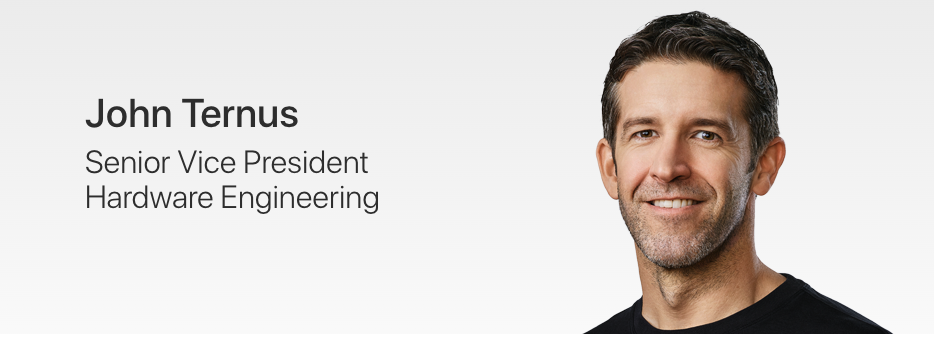
John Ternus embodies a different approach. Unlike Cook, whose career was rooted in logistics and manufacturing, Ternus is a hardware engineer who advanced through the company by designing products rather than overseeing their distribution. His appointment reflects a deliberate pivot toward Apple’s core identity: technology that feels intuitive and transformative. Former colleagues, including ex-Apple executive Tom Sadowski, have drawn parallels between Ternus and Steve Jobs, emphasizing a shared commitment to the intersection of technology and user experience. While the comparison highlights a focus on product vision, it also underscores the challenges of leading a company where operational discipline has long been a priority.
The distinction between the two leaders is evident. Cook’s leadership was characterized by growth through iteration—enhancing existing products, entering new markets, and cultivating recurring revenue streams. Early indications suggest Ternus may prioritize growth through innovation, though such a shift requires more than a change in leadership. It demands a willingness to embrace risk while preserving the stability Cook cultivated over more than a decade.
The Services Trap
When Cook assumed the role of CEO, Apple’s services division—encompassing iCloud, the App Store, and Apple Music—contributed a modest portion of the company’s revenue. Over time, that share grew substantially, reflecting a strategic effort to diversify beyond hardware. While this evolution appears successful on the surface, it also presents a complex dynamic.

The issue isn’t profitability; services remain among Apple’s most lucrative segments. The concern lies in their role as a stabilizing force. The iPhone continues to drive the bulk of Apple’s revenue, but its growth has moderated. Services were positioned as a solution to this slowdown, offering a reliable, subscription-based income stream. However, their expansion coincided with a period in which Apple introduced fewer new product categories. Initially a smaller part of the business, services later accounted for a notable rise in revenue. This shift didn’t occur because Apple transformed into a services company, but because the pace of hardware innovation slowed, leaving services to fill the gap.
Ternus faces the task of breaking this pattern without undermining its financial benefits. Services will remain a critical revenue source, but Apple’s long-term relevance depends on its ability to reintroduce the element of surprise. The question is whether Ternus can foster innovation while maintaining the operational rigor that defined Cook’s era.
Three Unresolved Crises
Ternus inherits not just a company at a crossroads, but three pressing challenges that have shaped Apple’s recent trajectory.
1. The AI Gap. Apple’s measured approach to generative AI has drawn attention, particularly as competitors integrate advanced capabilities into their core offerings. The company’s strength has long been its ability to simplify complex technology, but this advantage diminishes when the underlying technology lags. Ternus’ background in hardware could prove valuable, though AI demands more than engineering expertise—it requires software integration, ecosystem development, and agility. Apple has historically been a fast follower rather than a first mover, but its current position in AI represents one of its most significant delays in recent years.
2. China’s Fragile Hold. Apple’s supply chain, a model of efficiency, remains heavily concentrated in China. Geopolitical tensions, trade policies, and rising local competition have turned this reliance into a vulnerability. Cook’s tenure was marked by his ability to navigate these complexities, but the risks have only intensified. Ternus, whose career has focused on product design rather than global logistics, may face challenges in replicating Cook’s strategic maneuvering. The question isn’t whether Apple can diversify its supply chain, but whether it can do so without sacrificing the cost advantages that have underpinned its profitability.
3. The Subscription Dilemma. Apple’s expansion into subscriptions has been a financial success, but it has also created a new dependency. The more the company relies on recurring revenue from services, the less incentive it may have to pursue risky hardware innovations. Ternus’ engineering background suggests a preference for breakthrough products, but escaping the gravitational pull of the subscription model will be difficult. The iPhone’s dominance remains Apple’s greatest strength—and its most significant constraint.
What Comes Next—And What Doesn’t
Apple’s market valuation reflects Cook’s ability to deliver consistent growth, but investor sentiment has shifted in recent years. The company’s stock performance has lagged, not due to doubts about execution, but because of concerns about its ability to deliver unexpected breakthroughs. Ternus’ appointment acknowledges this reality, signaling a potential shift in strategy.

However, driving change at Apple’s scale is a delicate balancing act. The company’s culture is built on secrecy, precision, and control—qualities that don’t always align with the iterative, sometimes chaotic nature of innovation. Ternus’ challenge extends beyond generating new ideas; it involves fostering an environment where bold concepts can flourish without being stifled by bureaucracy or short-term financial pressures.
Former colleagues, including Sadowski, have offered measured assessments of Ternus’ potential, reflecting the cautious optimism that often accompanies leadership transitions. The timing of Cook’s departure, carefully planned with a clear successor in place, suggests a smooth transition. Yet smooth transitions don’t guarantee transformative outcomes. Apple’s next chapter will be shaped not by a single individual, but by the company’s ability to merge the discipline of Cook’s era with the creativity of its earlier years—and whether Ternus can navigate that divide.
Verwandte Artikel


